The Best Shrimp Pad Thai Recipe (Better Than Takeout!)
This post may contain affiliate links (disclosure).
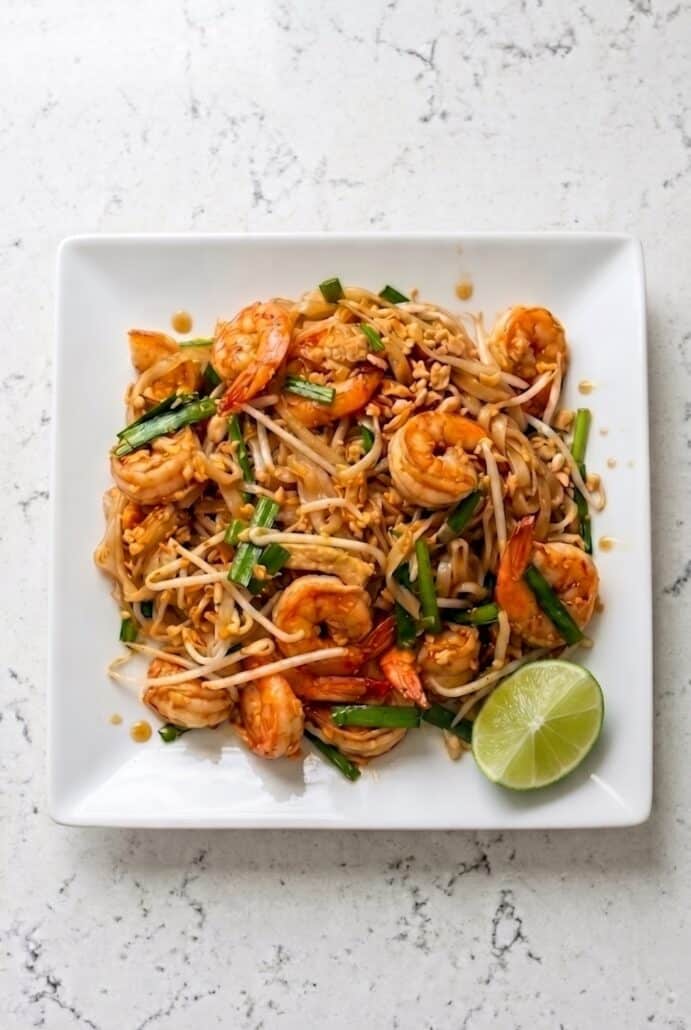
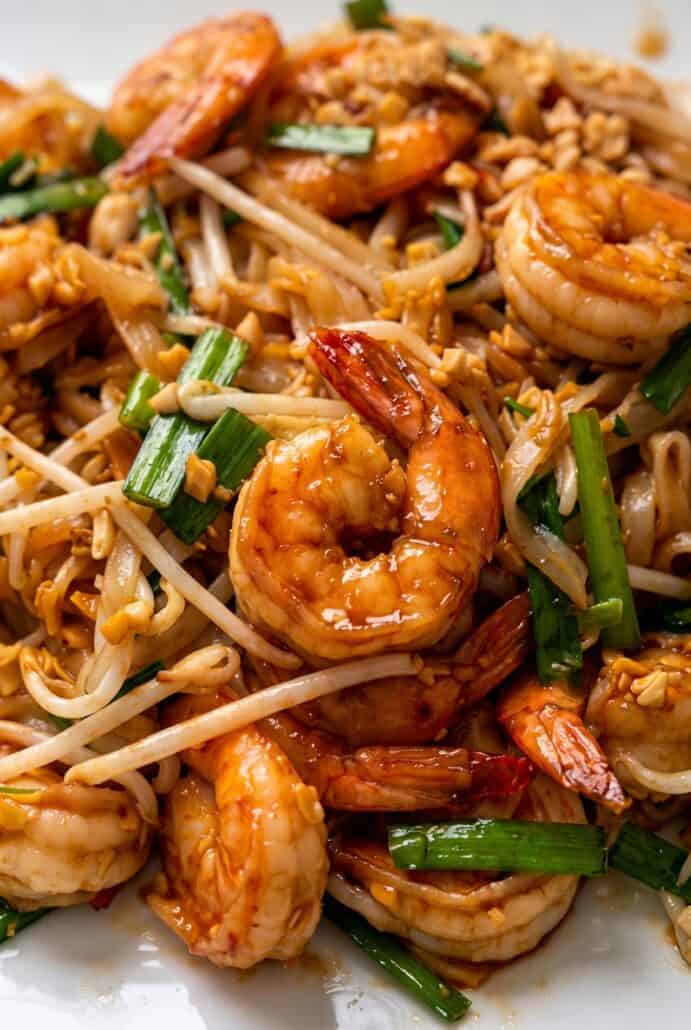
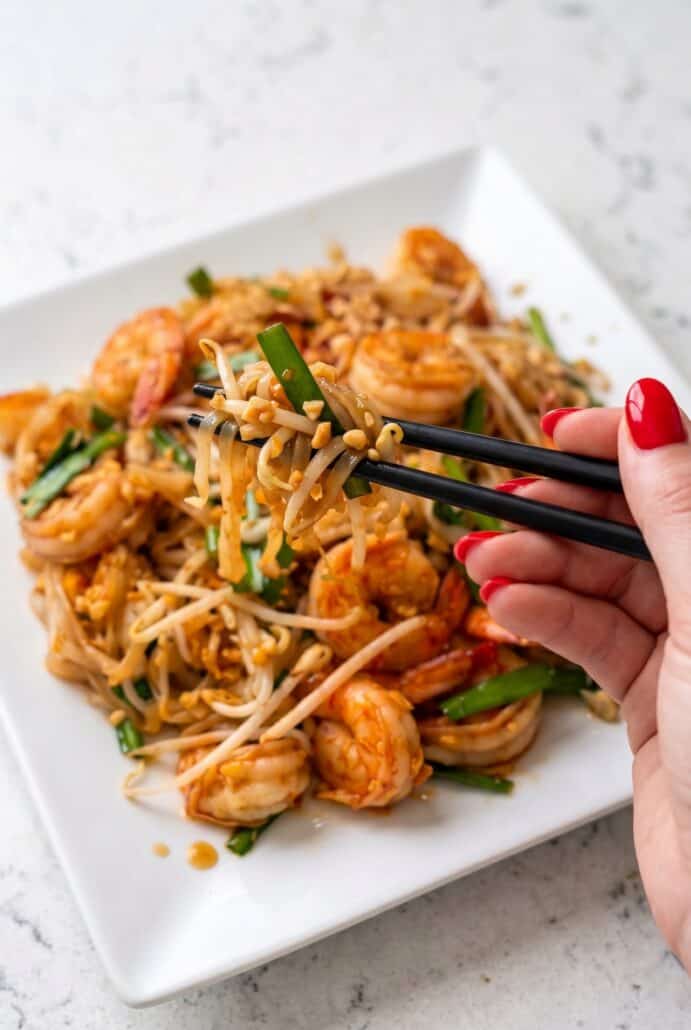
Shrimp Pad Thai is a delicious homemade version of the classic Thai noodle dish, made with tender shrimp, chewy rice noodles, tofu, eggs, crunchy bean sprouts, and a flavorful tamarind sauce. The sweet, savory, and tangy flavors come together perfectly in every bite. This easy Shrimp Pad Thai recipe is ready in just 30 minutes, making it a great choice for a quick weeknight dinner that tastes even better than takeout.
Want to save this recipe?
Why You’ll Love Shrimp Pad Thai
- This Shrimp Pad Thai is packed with sweet, savory, tangy, and slightly salty flavors. The tamarind sauce gives the noodles their signature bold taste. Juicy shrimp and tender tofu make every bite satisfying. Crushed peanuts add a delicious crunchy finish.
- It is ready in just 30 minutes. That makes it perfect for busy weeknights or quick weekend meals. Most of the cooking happens in one wok or skillet. Cleanup is simple and easy.
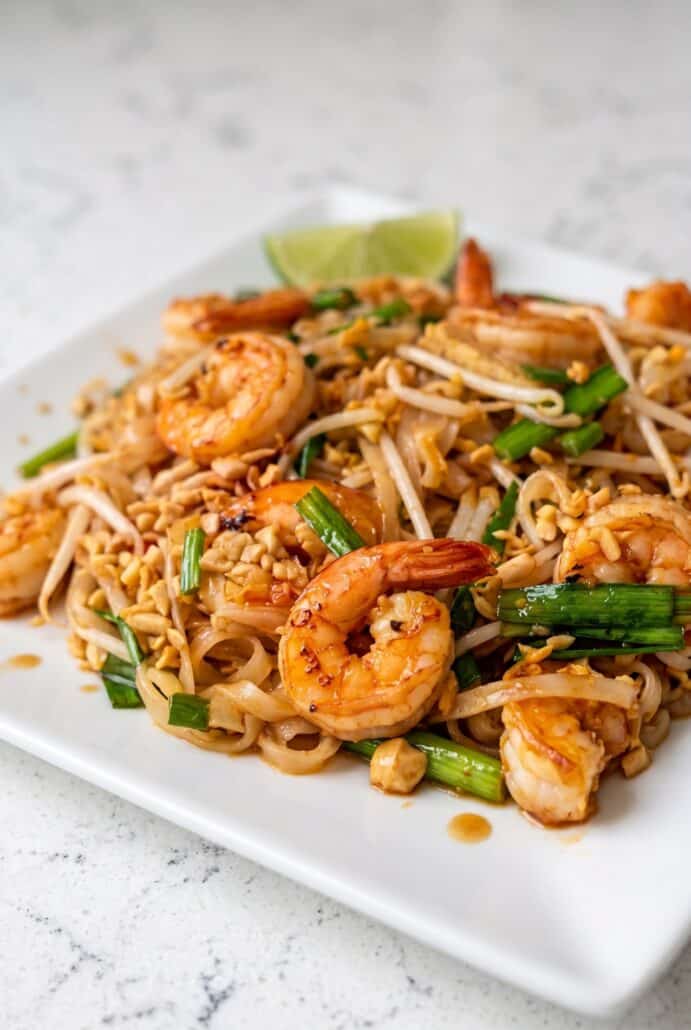
- The rice noodles cook up tender and chewy. They soak up the flavorful sauce without becoming heavy. Bean sprouts and garlic chives add freshness and texture. The combination tastes just like a restaurant-style noodle dish.
- This recipe is easy to customize at the table. Add extra lime juice for more tang. Sprinkle on more chili flakes for heat. Top each serving with extra peanuts and bean sprouts for added crunch.
- Shrimp Pad Thai is a complete meal in one dish. It includes protein, noodles, vegetables, and a rich sauce. You do not need to prepare several side dishes. It is filling enough for lunch or dinner.
- The recipe is easy to follow, even for beginner cooks. Preparing the ingredients before cooking keeps the process smooth. Each ingredient is added in a simple order. The final dish comes together quickly once the wok is hot.
Ingredients For Shrimp Pad Thai
- Tamarind pulp – Gives the sauce its signature tangy and slightly sweet flavor.
- Boiling water – Softens the tamarind pulp so it can be strained into a smooth puree.
- Brown sugar or palm sugar – Adds sweetness and balances the sour tamarind.
- Fish sauce – Brings a deep savory and salty flavor to both the sauce and shrimp.
- Oyster sauce – Adds richness and extra umami to the Pad Thai sauce.
- Shrimp – Provides a tender, juicy protein that cooks quickly.
- Thai soy sauce – Seasons the shrimp with a light salty flavor.
- Pad Thai rice noodles – Create the chewy noodle base of the dish.
- Cooking oil – Used to cook the shrimp, aromatics, tofu, and eggs.
- Garlic – Adds bold flavor and a delicious aroma.
- Shallots – Bring mild sweetness and savory depth.
- Firm tofu – Holds its shape during cooking and adds tender texture.
- Dried shrimp – Adds extra savory flavor and a slightly chewy texture.
- Eggs – Add protein, richness, and soft scrambled pieces throughout the noodles.
- Bean sprouts – Provide freshness and a crisp crunch.
- Garlic chives – Add a mild garlic flavor and a pop of green color.
- Roasted peanuts – Give the Pad Thai a crunchy, nutty finish.
- Lime – Adds bright, fresh acidity when squeezed over the finished dish.
- Dried chili flakes – Add a touch of heat.
For the exact measurements of the ingredients, see the printable recipe card at the bottom of this article.
How To Make Shrimp Pad Thai
- Soften the tamarind pulp with boiling water, then press it through a fine-mesh strainer. Mix the smooth tamarind puree with brown sugar, fish sauce, and oyster sauce.
- Toss the peeled shrimp with Thai soy sauce and fish sauce. Set it aside while you prepare the noodles.
- Cook the Pad Thai noodles according to the package directions until just al dente. Drain them well so they do not become soggy.
- Heat oil in a wok or large skillet. Cook the shrimp until pink and fully cooked, then remove it from the pan.
- Add more oil to the same pan. Sauté the garlic and shallots until fragrant, then stir in the tofu and dried shrimp.
- Move the ingredients to one side of the pan. Pour in the beaten eggs and gently scramble them.
- Add the cooked noodles and prepared Pad Thai sauce. Toss everything together until the noodles are evenly coated.
- Return the shrimp to the pan. Turn off the heat and mix in the bean sprouts, garlic chives, and crushed peanuts.
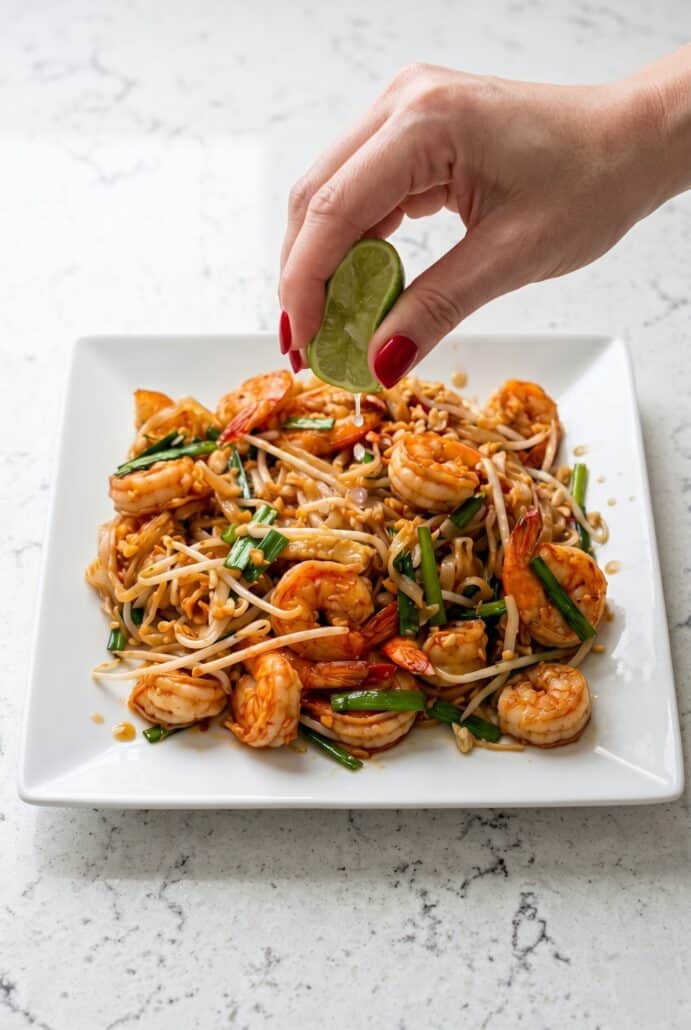
- Serve the Shrimp Pad Thai right away. Top it with extra peanuts, fresh bean sprouts, lime wedges, and chili flakes.
Serving Suggestions
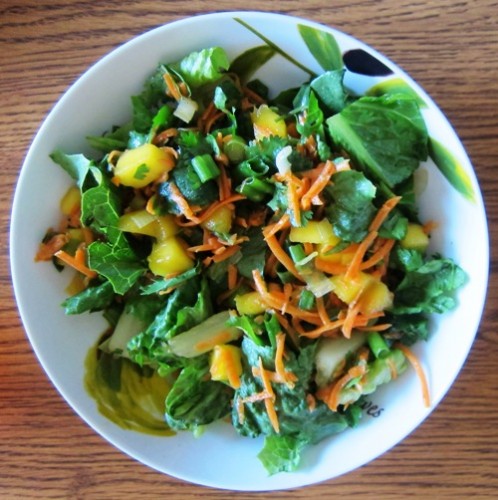
- Serve Shrimp Pad Thai with Thai mango carrot salad for a cool and crunchy side dish.
- Pair it with a fresh spring roll bowl for a light appetizer that goes well with the noodles.
- Add a bowl of hot and sour soup to make it a cozy Thai-inspired meal.
- Serve it with garlic soy sauce bok choy for an easy vegetable side.
- Pair it with Asian cucumber salad for extra crunch and freshness.
- Add mango sticky rice for a sweet dessert after the savory noodles.
- Serve with iced green tea for a fun takeout-style dinner at home.
Want to save this recipe?
Tips For Success
- The most important tip for making Shrimp Pad Thai is to have everything ready before you start cooking. This recipe moves quickly once the wok or skillet is hot. Chop the garlic, mince the shallots, slice the tofu, cut the garlic chives, whisk the eggs, and measure out the sauce ingredients before you turn on the stove. This makes the cooking process much easier and helps prevent anything from overcooking.
- Be careful not to overcook the rice noodles. Pad Thai noodles should be cooked just until al dente, since they will continue to soften when they are tossed with the sauce in the hot pan. If the noodles are too soft before they go into the wok, they can turn mushy. Drain them well so the finished dish does not become watery.
- When preparing the tamarind pulp, take the time to soften it well with boiling water. Break it apart as much as possible, then press it through a fine-mesh strainer to remove any solids. This gives the sauce a smooth texture and helps it coat the noodles evenly. The tamarind is what gives Pad Thai its classic tangy flavor, so this step is worth doing carefully.
- Use a large wok or nonstick skillet so the ingredients have room to cook. If the pan is too crowded, the noodles can clump together and the shrimp may steam instead of sear. Cook the shrimp just until pink and cooked through, then remove it from the pan. Adding it back at the end keeps it juicy and tender.
- Taste the finished Pad Thai with the toppings. Lime juice, crushed peanuts, fresh bean sprouts, and chili flakes add so much flavor and texture. A squeeze of lime makes the noodles brighter. Peanuts add crunch. Chili flakes add heat. These simple toppings make the dish taste fresh, balanced, and delicious.
Click Here To Pin This Recipe
Shrimp Pad Thai
This Shrimp Pad Thai combines chewy rice noodles, juicy shrimp, tender tofu, crisp bean sprouts, and scrambled eggs in a sweet, savory, and tangy tamarind sauce. It is an easy Thai noodle recipe that comes together in just 30 minutes. Serve it with crushed peanuts, fresh lime, and chili flakes for a flavorful homemade dinner.
Servings: 3
Want to save this recipe?
Ingredients
- 3 tbsp tamarind pulp about 1½ ounces
- ¼ cup boiling water plus more if needed
- ¼ cup brown sugar or palm sugar
- 3 tbsp fish sauce divided
- 2 tbsp oyster sauce
- 8 ounces shrimp peeled and deveined
- 1 tsp Thai soy sauce
- 6 ounces dry Pad Thai rice noodles
- 4 tbsp cooking oil divided
- 4 garlic cloves minced
- ⅓ cup shallots minced, about 3 shallots
- 3 ounces firm tofu drained and sliced into thin pieces
- 2 tbsp dried shrimp
- 2 eggs whisked
- 2 cups loosely packed bean sprouts
- 10 garlic chives cut into 1-inch pieces
- 2 tbsp roasted peanuts crushed
- 2 tbsp roasted peanuts crushed, for serving
- 1 lime cut into wedges
- ¼ tsp dried chili flakes or to taste
- ½ cup bean sprouts additional, for serving
Instructions
- Place the tamarind pulp in a small bowl and pour the boiling water over it. Break the pulp apart until softened, then press the mixture through a fine-mesh strainer and discard the solids.
- Add the brown sugar, 2 tablespoons of fish sauce, and oyster sauce to the strained tamarind puree. Stir until well combined and set the sauce aside.
- Place the shrimp in another bowl. Add the Thai soy sauce and remaining 1 teaspoon of fish sauce, then stir to coat.
- Bring a medium pot of water to a boil. Cook the Pad Thai noodles according to the package directions until al dente, then drain and set aside.
- Heat 1 tablespoon of oil in a wok or large nonstick skillet over high heat. Add the shrimp and cook for about 2 minutes, turning as needed, until pink and cooked through. Transfer to a plate.
- Add 2 tablespoons of oil to the same pan and reduce the heat to medium. Add the garlic and shallots and cook for about 2 minutes, until fragrant and lightly browned.
- Add the tofu and dried shrimp to the pan. Stir-fry for about 2 minutes.
- Push the ingredients to one side of the pan. Add the remaining tablespoon of oil, pour in the eggs, and gently scramble for about 30 seconds.
- Add the noodles and prepared sauce. Toss until the noodles are evenly coated, then return the cooked shrimp to the pan.
- Turn off the heat and add the bean sprouts, garlic chives, and crushed peanuts. Toss gently and serve with extra peanuts, bean sprouts, lime wedges, and chili flakes.
Notes
- Cook the noodles only until al dente because they will continue softening in the sauce.
- Measure and prepare all the ingredients before heating the wok since the recipe cooks quickly.
NEVER MISS A RECIPE!I publish a new recipe several times per week. Want the new recipes in your inbox? Sign up for FREE notifications!
Save This Recipe