Tofu and Chive Wontons in Spicy Chili Broth

This post may contain affiliate links (disclosure). 

If you love homemade dumplings, these Vegan Tofu and Chive Wontons in Chili Broth are a must-try recipe. Filled with savory tofu, fresh garlic chives, and bold seasonings, these wontons have an amazing texture and rich flavor in every bite. Served in a warm spicy chili broth, this easy vegan wonton recipe is perfect for lunch, dinner, or whenever you are craving cozy comfort food.
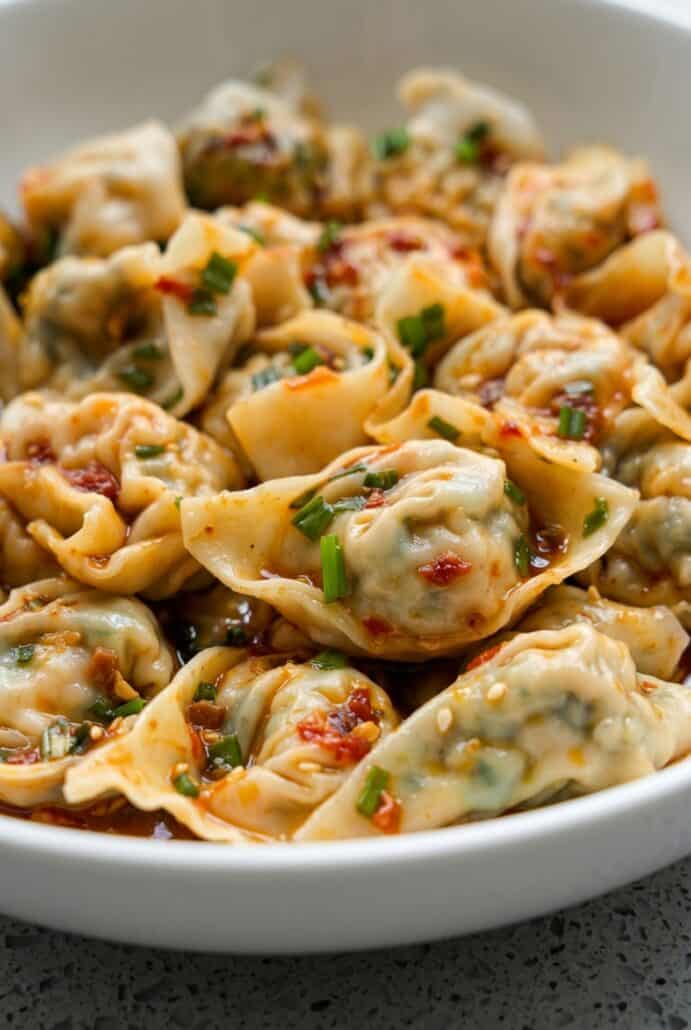
Bowl of vegan tofu and chive wontons in spicy chili broth topped with scallions and chili oil.

Want to save this recipe?

Just enter your email and I’ll send it right to you, plus great new recipes weekly!

Why You’ll Love Tofu and Chive Wontons in Chili Broth

  • These homemade wontons are packed with savory flavor in every bite. The tofu filling is hearty and satisfying, with a texture that feels rich and delicious. Fresh garlic chives add a wonderful aroma and classic flavor. It is a great plant-based twist on traditional wontons.
  • The spicy chili broth makes this recipe extra comforting and exciting. It adds warmth, bold flavor, and just the right amount of heat. Every spoonful is full of delicious savory goodness. You can easily adjust the spice level to your liking.
  • This recipe is perfect for meal prep and freezer cooking. You can make a batch of wontons ahead of time and freeze them uncooked. Then simply boil them whenever you need a quick meal. It is a smart way to have homemade food ready anytime.
  • These wontons are surprisingly easy to make at home. The filling comes together quickly with simple ingredients. Folding the wontons is fun and gets easier after the first few. It is a rewarding recipe that looks impressive but is very doable.
  • You can serve these wontons in many different ways. Enjoy them in chili broth, with dipping sauce, or alongside noodles and vegetables. They work as an appetizer, side dish, or main meal. This versatility makes them a recipe you will want to make again and again.
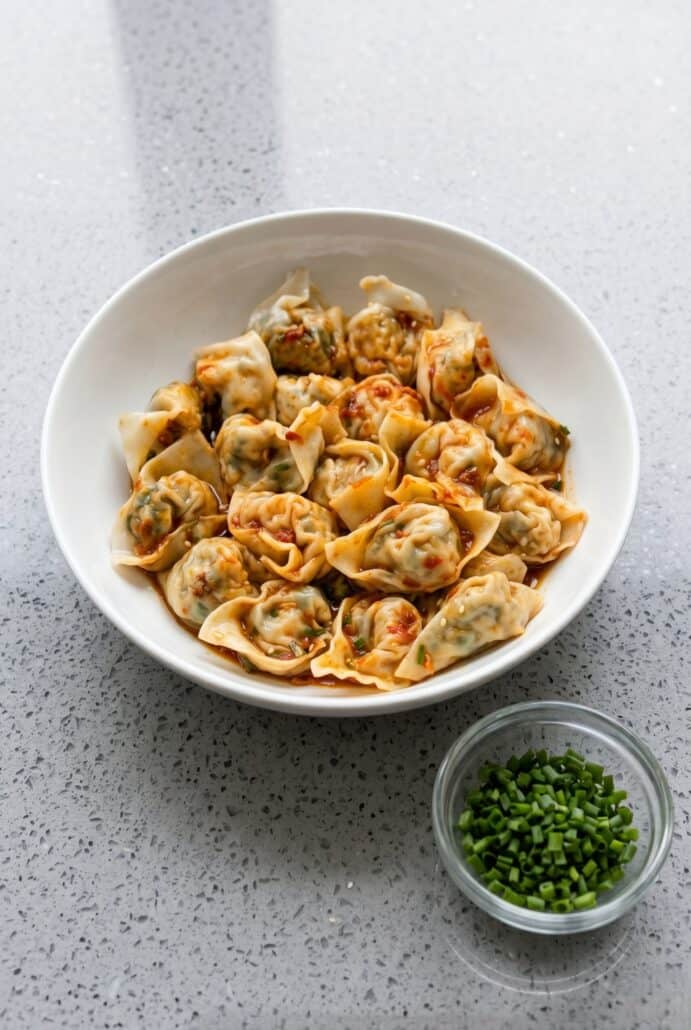
Plate of vegan tofu and chive wontons topped with chili oil.

Ingredients For Tofu and Chive Wontons in Chili Broth

  • Wonton wrappers – These hold the delicious filling and cook up tender and silky. Use square wrappers for classic wonton shaping.
  • Extra-firm tofu – Frozen, thawed, and pressed tofu creates a firmer and meatier texture that works perfectly for filling.
  • Fresh garlic chives – These add bold onion-garlic flavor and freshness to the wontons. They are the star ingredient in the filling.
  • Neutral oil – Used for sautéing the filling ingredients without overpowering the flavors.
  • Vegetarian oyster sauce or stir-fry sauce – Adds savory umami flavor and richness to the tofu mixture.
  • Chinese five spice powder – Gives the filling warm aromatic flavor with just a small amount.
  • Salt – Enhances all the flavors in the filling.
  • Cornstarch – Helps absorb moisture and binds the filling together for easier wrapping.
  • Soy sauce – Adds salty depth and classic flavor to the chili broth.
  • Chili garlic sauce – Brings spice, garlic flavor, and bold heat to the broth.
  • Doubanjiang or chili bean paste – Adds extra richness and savory chili flavor.
  • Sugar – Balances the spicy and salty flavors in the broth.
  • Rice vinegar or white vinegar – Adds brightness and tang to the broth.
  • Toasted sesame seeds – Give the broth nutty flavor and texture.
  • Sesame oil – Adds a rich toasted aroma and delicious finish.
  • Scallions – Fresh garnish that adds color and mild onion flavor.

For the exact measurements of the ingredients, see the printable recipe card at the bottom of this article.
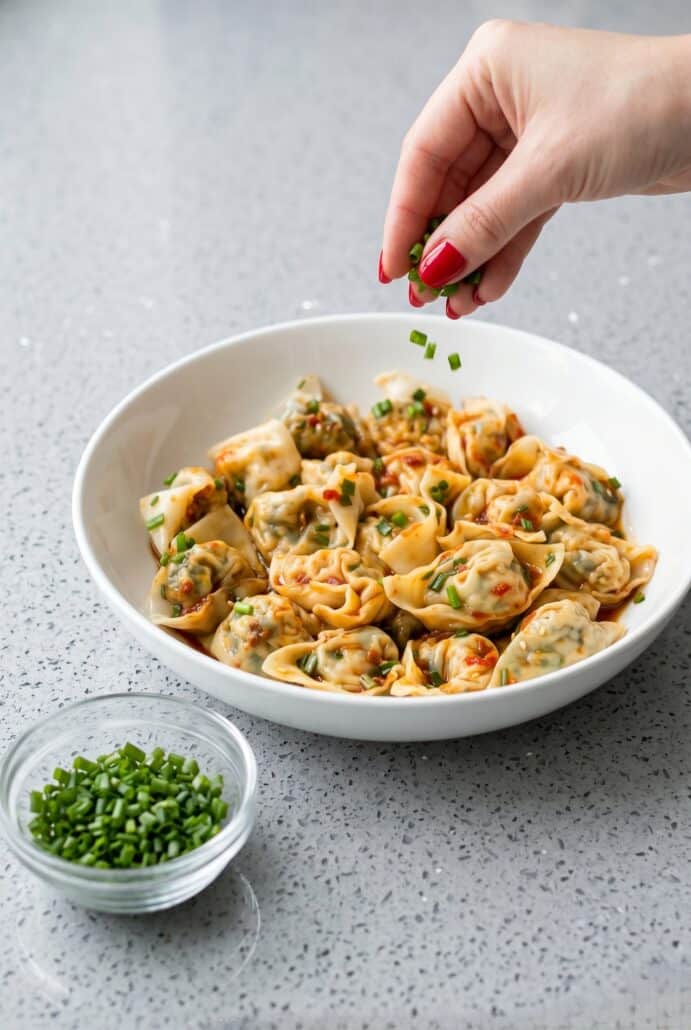
Hand sprinkling chopped chives over vegan tofu wontons with chili oil for a flavorful homemade Asian dish.

How To Make Tofu and Chive Wontons in Chili Broth

  • Crumble the thawed and pressed tofu into a bowl. Finely chop the garlic chives so they mix evenly into the filling.
  • Heat oil in a large skillet over medium heat. Add the tofu and garlic chives, then cook for a few minutes until excess moisture evaporates.
  • Stir in the vegetarian oyster sauce, five spice powder, salt, and cornstarch. Mix well, then remove from heat and let the filling cool completely.
  • Place a wonton wrapper on a clean surface. Brush the edges lightly with water and spoon a small amount of filling into the center.
  • Fold the wrapper into a triangle and press out any trapped air. Seal the edges tightly, then bring the two bottom corners together and pinch to form the wonton shape.
  • Continue filling and folding the remaining wrappers. Keep finished wontons covered with a towel so they stay soft and do not dry out.
  • Bring a large pot of salted water to a boil. Add the wontons in batches so the pot is not overcrowded.
  • Cook for 2 to 3 minutes until the wontons float and the wrappers become slightly translucent. Remove with a slotted spoon.
  • In a bowl, stir together hot water or wonton cooking water, soy sauce, chili garlic sauce, doubanjiang, sugar, vinegar, sesame seeds, and sesame oil.
  • Divide wontons into serving bowls, pour the chili broth over the top, garnish with scallions, and serve hot.
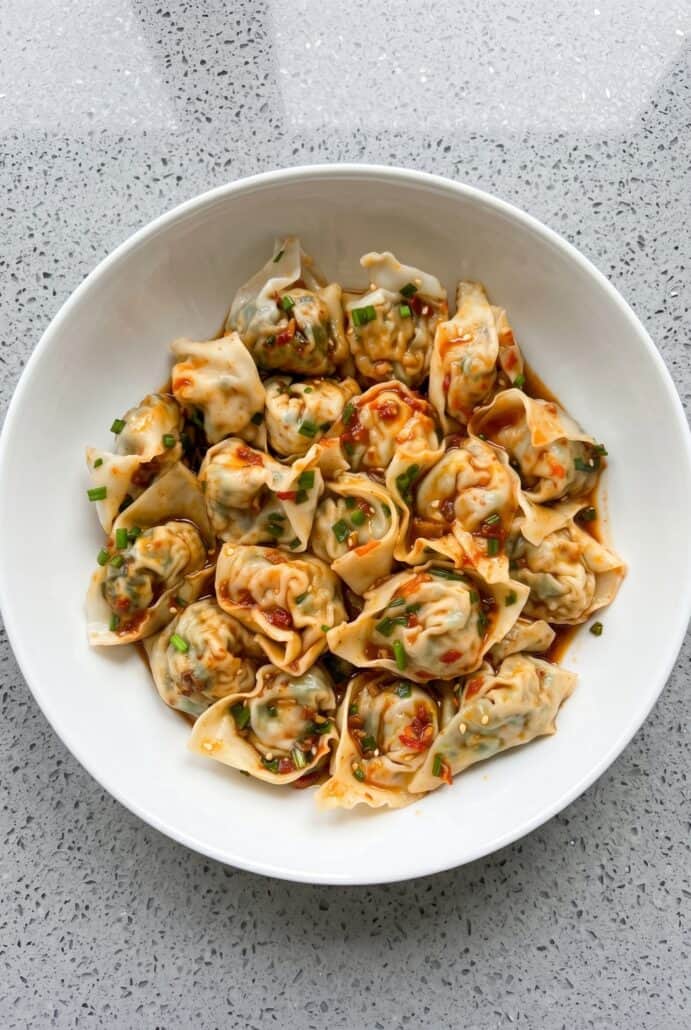
Top view of vegan tofu and chive wontons drizzled with chili oil, served in a bowl.

Serving Suggestions

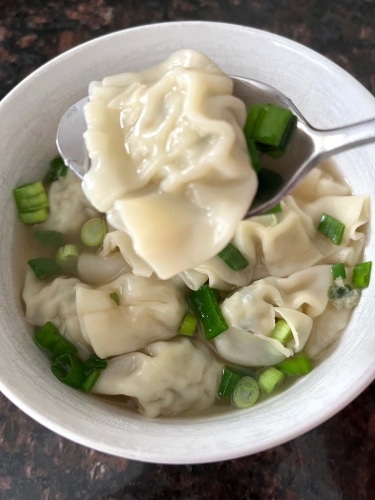
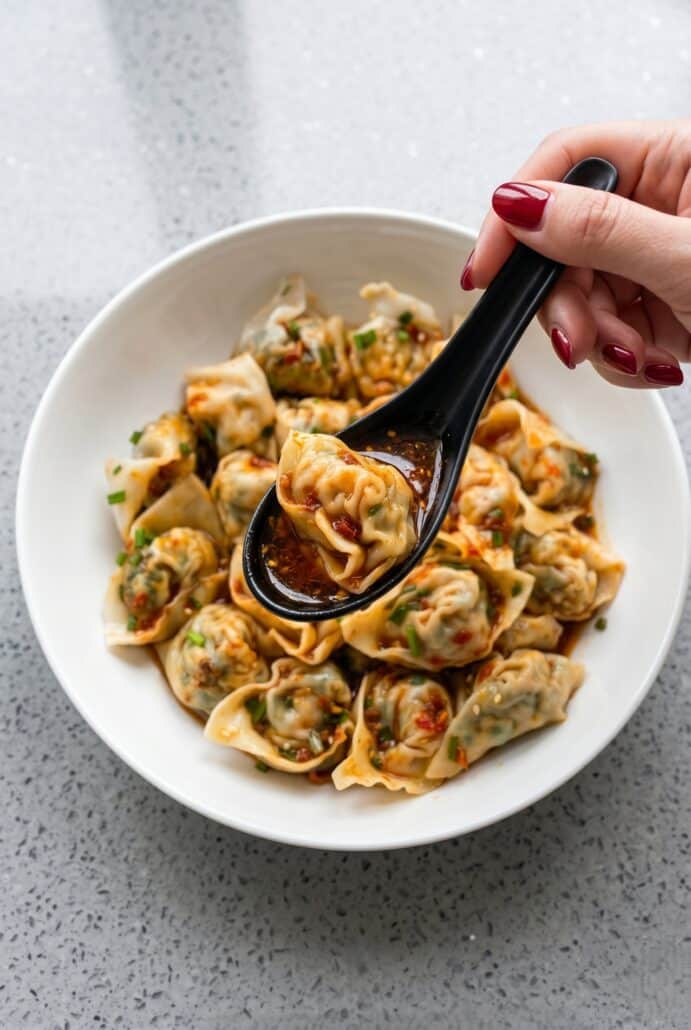
Spoon lifting vegan tofu and chive wontons with chili oil from a bowl of homemade spicy wonton dish.

Want to save this recipe?

Just enter your email and I’ll send it right to you, plus great new recipes weekly!

Tips For Success

  • Using frozen and thawed tofu is one of the best ways to make the filling extra hearty and delicious. Freezing changes the texture of tofu and helps it become firmer and chewier after thawing. This gives the wonton filling a more satisfying bite that works wonderfully in place of meat. Make sure to thaw the tofu completely before pressing out the extra water.
  • Pressing the tofu well is an important step you do not want to skip. Removing excess moisture helps the filling stay flavorful instead of watery. It also allows the tofu to absorb the seasonings better during cooking. Use paper towels or a clean kitchen towel and press gently until most of the liquid is gone.
  • Finely chopping the garlic chives helps the filling mix evenly and makes wrapping easier. Large pieces can poke through the wrapper or create uneven filling. Smaller pieces blend beautifully with the tofu and give every bite fresh flavor. If your chives are thick, slice them thinly for the best texture.
  • Cook the filling long enough for extra moisture to evaporate before stuffing the wontons. If the filling is too wet, the wrappers can become soggy and harder to seal. Stir the mixture often while it cooks so everything dries evenly. Let the filling cool completely before assembling the wontons.
  • Keep the wonton wrappers covered while you work. They dry out quickly when left exposed to air, which can make them crack or tear. Cover unused wrappers with a towel or plastic wrap. This simple step makes folding much easier.
  • Do not overfill the wrappers. A small spoonful of filling is enough for each wonton. Too much filling can cause the wrapper to burst during boiling or make sealing difficult. It is better to make slightly smaller wontons that stay neatly closed.
  • Press out any trapped air before sealing each wonton. Air pockets can expand during cooking and open the wrapper. Gently flatten around the filling before pinching the edges closed. Seal tightly so the wontons stay intact.
  • Cook the wontons in batches instead of overcrowding the pot. Giving them space helps them cook evenly and prevents sticking. Stir gently after adding them to the water so they do not settle on the bottom. Once they float and look translucent, they are ready.
  • Taste the chili broth before serving and adjust it to your liking. Add more vinegar for tang, sugar for balance, or chili sauce for heat. Customizing the broth makes the dish perfect for your taste preferences. Small changes can make a big difference.
  • Serve the wontons immediately for the best texture. Freshly cooked wrappers are tender and silky, and the broth is hot and fragrant. If they sit too long, the wrappers may soften too much. Enjoy them right away for the best homemade wonton experience.

Variations And Substitutions

  • This recipe is very flexible, so you can easily change the filling based on what you have available. Instead of extra-firm tofu, you can use crumbled tempeh for a nuttier flavor and firmer texture. Finely chopped mushrooms are another great option and add a savory, meaty bite. A mix of tofu and mushrooms also works beautifully.
  • If you do not have garlic chives, regular chives are an easy substitute. Green onions can also be used and will give a milder onion flavor. Finely chopped leeks are another delicious option if cooked first until soft. Any of these swaps will still create a flavorful filling.
  • For even more vegetables, add finely chopped cabbage, napa cabbage, carrots, or spinach to the mixture. Make sure to cook watery vegetables first so the filling does not become soggy. Shredded zucchini can also be used if squeezed dry before adding. Extra vegetables are a great way to stretch the recipe and add nutrition.
  • If you want a stronger umami flavor, swap the vegetarian oyster sauce for hoisin sauce or mushroom stir-fry sauce. Soy sauce can also be added, though use less salt if doing so. Miso paste mixed with a splash of water is another rich and tasty option. Choose what best matches your pantry ingredients.
  • Chinese five spice gives warm classic flavor, but you can substitute ground white pepper, black pepper, or a pinch of ginger powder. Garlic powder or onion powder also work well for extra depth. If you prefer a simpler taste, leave the spice out completely. The filling will still be delicious.
  • Wonton wrappers are traditional, but round dumpling wrappers can also be used. You can fold them into half moons or pleated dumplings instead of classic wonton shapes. If using thicker wrappers, cooking time may need to be slightly longer. Keep wrappers covered while working so they stay soft.
  • Instead of boiling the wontons, try steaming them for a softer texture. Pan-frying gives crispy bottoms and tender tops, similar to potstickers. Deep frying creates crunchy wontons that are perfect for dipping sauces. This one filling can be used in several different cooking styles.
  • The chili broth can be adjusted in many ways. For a milder version, reduce the chili garlic sauce and add extra hot water. For more heat, stir in chili crisp, red pepper flakes, or extra doubanjiang. If you prefer a non-spicy option, serve the wontons in simple vegetable broth.
  • You can also change the vinegar in the broth depending on what you have. Rice vinegar gives a light tang, while white vinegar is sharper. Black vinegar adds a deeper, richer flavor. Each version gives the broth a different personality.
  • For garnish, try chopped cilantro, toasted peanuts, extra sesame seeds, or crispy garlic. These toppings add texture and fresh flavor. You can also drizzle extra sesame oil before serving. Small finishing touches make the dish even better.

Storage and Reheating

  • Store leftover cooked wontons in an airtight container in the refrigerator for up to 3 days. Keep the broth separate if possible so the wrappers stay in the best texture.
  • Uncooked assembled wontons can be frozen on a tray in a single layer until firm. Transfer them to a freezer-safe bag or container and freeze for up to 3 months.
  • To reheat refrigerated wontons, place them in a pot of simmering water for 1 to 2 minutes until heated through. You can also add them directly to hot broth to warm them gently.
  • Reheat the chili broth separately in a small saucepan over medium heat until hot. Pour it over the warmed wontons just before serving.
  • Frozen wontons should be cooked straight from frozen without thawing. Boil for a few extra minutes until they float and are fully heated inside.
  • Avoid microwaving for too long, as the wrappers can become too soft or chewy. Gentle stovetop reheating gives the best results.

Frequently Asked Questions

Can I make these wontons ahead of time?

Yes, these wontons are excellent for making ahead. You can prepare the filling and store it in the refrigerator for up to one day before wrapping. You can also fully assemble the wontons and keep them covered in the refrigerator for several hours before cooking. If making them further in advance, freezing is the best option. Arrange the uncooked wontons on a tray in a single layer until firm, then transfer them to a freezer bag or container. This keeps them from sticking together and makes it easy to cook only what you need later.

Why should I freeze the tofu first?

Freezing tofu changes its texture in a very helpful way for this recipe. Once thawed and pressed, tofu becomes firmer and more porous, which gives it a chewier and meatier bite. It also absorbs seasonings better than fresh tofu. This makes the filling more flavorful and satisfying. If you skip freezing, the wontons will still taste good, but the texture will be softer and less hearty. For the best results, freeze the tofu overnight, then thaw completely before using.

Can I use regular chives instead of garlic chives?

Yes, regular chives are a great substitute if garlic chives are not available. Garlic chives have a stronger garlicky flavor, while regular chives taste milder and more onion-like. Green onions can also work in this recipe. If using green onions, finely chop them so they blend well into the filling. You may need slightly more regular chives to get a stronger flavor. No matter which option you choose, the wontons will still be delicious.

How do I keep the wonton wrappers from drying out?

Wonton wrappers dry out quickly when exposed to air, so it is important to keep them covered while you work. Use a clean kitchen towel, damp paper towel, or plastic wrap over the stack of wrappers. Only remove a few wrappers at a time as needed. If the wrappers dry out, they can crack, tear, or become difficult to seal. Keeping them soft and pliable makes folding much easier. This small step can make a big difference when preparing a large batch.

Why are my wontons opening during cooking?

Wontons usually open during cooking because they were not sealed tightly enough or the edges had filling on them. Moisture and oil from the filling can prevent the wrapper edges from sticking together properly. Always keep the edges clean and brush lightly with water before sealing. Press firmly to remove air pockets and pinch the seams tightly closed. Overfilling can also cause bursting during boiling. Using a smaller amount of filling often solves the problem.

Can I make these wontons less spicy?

Absolutely. The chili broth is easy to adjust to your taste. Use less chili garlic sauce and doubanjiang for a milder broth, or leave them out completely. You can replace the spicy ingredients with extra soy sauce, sesame oil, and a little vegetable broth for a gentle savory version. A touch of sugar and vinegar still adds balance and brightness. This makes the recipe family-friendly and perfect for anyone who prefers mild flavors.

What other ways can I cook these wontons?

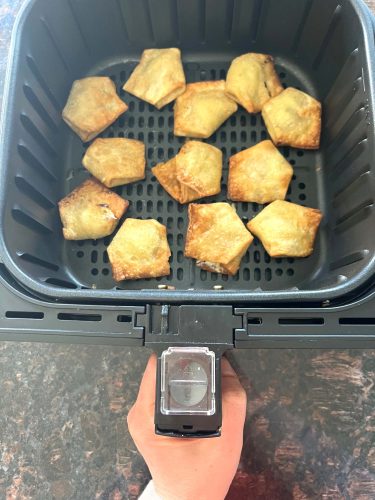
Boiling is one of the easiest methods, but there are several other great options. You can steam them for a soft and tender texture. Pan-frying gives crispy bottoms with tender tops, similar to potstickers. Deep frying creates crunchy wontons that are perfect as appetizers. Air frying may also work if lightly sprayed with oil. Each cooking method gives a different texture, so you can choose based on what you are craving.

What can I serve with these wontons?

These wontons pair well with many side dishes and simple meals. Serve them with noodles, stir-fried vegetables, rice dishes, or light salads. They also make a great appetizer alongside spring rolls or scallion pancakes. If serving in broth, extra greens such as bok choy or spinach are delicious additions. You can also top them with scallions, sesame seeds, or chili oil. Their versatility makes them easy to include in many meals.

Other Easy Wonton Recipes

Click Here To Pin This Recipe

Tofu and Chive Wontons in Chili Broth

These vegan tofu and chive wontons are packed with savory flavor and delicious texture in every bite. Frozen and thawed tofu creates a hearty, meaty filling that pairs perfectly with fresh garlic chives. Served in a bold and aromatic chili broth, this homemade wonton recipe is comforting, satisfying, and full of flavor.
Prep Time35 minutes
Cook Time15 minutes
Total Time50 minutes
Course: Appetizer, Main Course, Soup
Cuisine: Asian, Chinese
Keyword: chili broth wontons, chive wontons, homemade wontons, tofu wontons, vegan wontons
Cooking Method: Boiling, Stovetop
Diet: Dairy-Free, Egg-free, Vegan
Servings: 6

Want to save this recipe?

Just enter your email and I’ll send it right to you, plus great new recipes weekly!

Ingredients

  • 25 wonton wrappers
  • 7 oz extra-firm tofu frozen overnight, thawed, and pressed
  • 3.5 oz fresh garlic chives finely chopped
  • 1 tbsp neutral oil
  • 1 tbsp vegetarian oyster sauce or stir-fry sauce
  • 1/4 tsp Chinese five spice powder
  • 1/4 tsp salt
  • 1 tbsp cornstarch
  • 1/2 cup hot water or wonton cooking water
  • 1/2 tbsp soy sauce
  • 1 tbsp chili garlic sauce
  • 1 tsp doubanjiang or chili bean paste
  • 1 tsp sugar
  • 1 tbsp rice vinegar or white vinegar
  • 1 tsp toasted sesame seeds
  • 2 tsp sesame oil
  • 2 tbsp scallions chopped, for garnish
  • Extra chili sauce to taste

Instructions

  • Crumble 7 oz thawed and pressed tofu into small pieces. Finely chop 3.5 oz garlic chives.
  • Heat 1 tbsp oil in a large skillet over medium heat. Add tofu and chives, then cook for 3 to 4 minutes until excess moisture evaporates.
  • Stir in 1 tbsp vegetarian oyster sauce, 1/4 tsp five spice powder, and 1/4 tsp salt. Add 1 tbsp cornstarch and mix until combined. Remove from heat and let cool.
  • Place 1 wonton wrapper on a flat surface. Brush edges lightly with water and add 1/2 to 1 tbsp filling in the center.
  • Fold wrapper into a triangle, press out air pockets, and seal edges tightly. Bring bottom corners together and pinch to seal. Repeat with remaining wrappers and filling. Cover finished wontons with a towel.
  • Bring a large pot of salted water to a boil over medium-high heat.
  • Add wontons in batches and boil for 2 to 3 minutes until they float and wrappers turn translucent. Remove cooked wontons and reserve 1/2 cup cooking water.
  • In a bowl, combine 1/2 cup hot water, 1/2 tbsp soy sauce, 1 tbsp chili garlic sauce, 1 tsp doubanjiang, 1 tsp sugar, 1 tbsp vinegar, 1 tsp sesame seeds, and 2 tsp sesame oil. Stir well.
  • Divide cooked wontons among serving bowls and pour chili broth over the top.
  • Garnish with 2 tbsp chopped scallions and extra chili sauce to taste. Serve immediately.

Notes

  • Keep the wrapper edges clean so the wontons seal properly.
  • Freeze uncooked wontons on a tray first, then transfer to a freezer bag for storage.
NEVER MISS A RECIPE!I publish a new recipe several times per week. Want the new recipes in your inbox? Sign up for FREE notifications!
Save This Recipe
Other Easy Appetizer Recipes

Get Melanie's FREE Recipes In Your Inbox!

Similar Posts

Leave a Reply

Your email address will not be published. Required fields are marked *

Rate This Recipe (only if you tried it, otherwise leave blank)