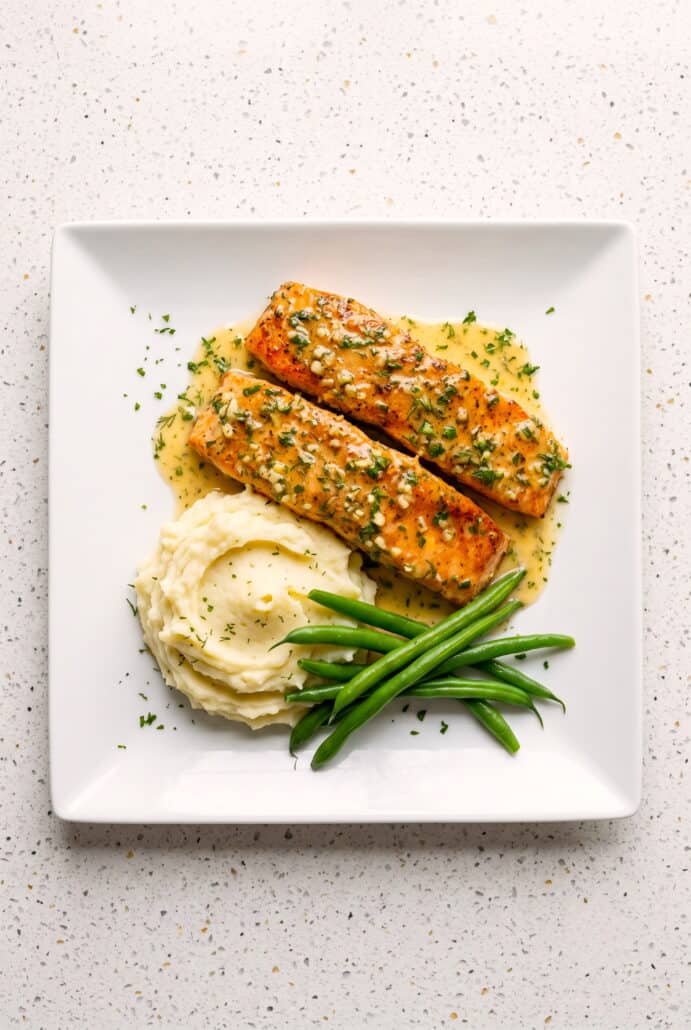
Simple Garlic Butter Salmon Dinner Recipe
This post may contain affiliate links (disclosure).
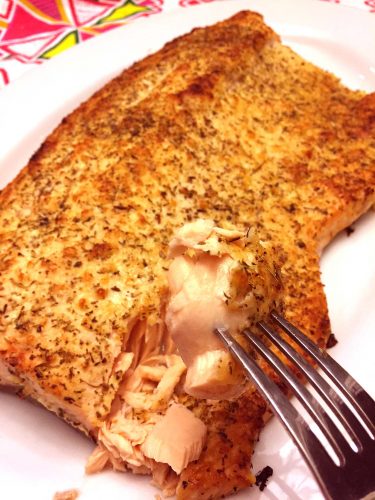
This easy garlic butter salmon is the perfect recipe for a quick and flavorful dinner. The salmon is pan-fried until golden, then coated in a rich garlic butter sauce made with fresh garlic, parsley, and vegetable stock. Ready in just 25 minutes, this simple stovetop salmon recipe is great for busy weeknights, family dinners, or an impressive meal for guests.
Want to save this recipe?
Why You’ll Love Garlic Butter Salmon
- The salmon turns golden and crisp on the outside. The inside stays tender and flaky. The garlic butter sauce adds rich flavor to every bite. A squeeze of lemon balances the richness perfectly.
- This recipe is quick enough for a busy weeknight. It takes just 25 minutes from start to finish. The steps are simple and easy to follow. Even beginner cooks can make it successfully.
- The sauce uses only a few basic ingredients. Fresh garlic, butter, parsley, and vegetable stock come together beautifully. The stock helps the sauce thicken without becoming greasy. It also adds extra depth of flavor.
- The seasoned flour coating gives the salmon a delicious crust. It also helps the garlic butter sauce cling to the fish. Every fillet is coated in flavorful sauce. This makes each bite rich and satisfying.
- This garlic butter salmon works for many occasions. It is easy enough for a family dinner. It also feels special enough to serve to guests. You can pair it with potatoes, vegetables, bread, or a simple salad.
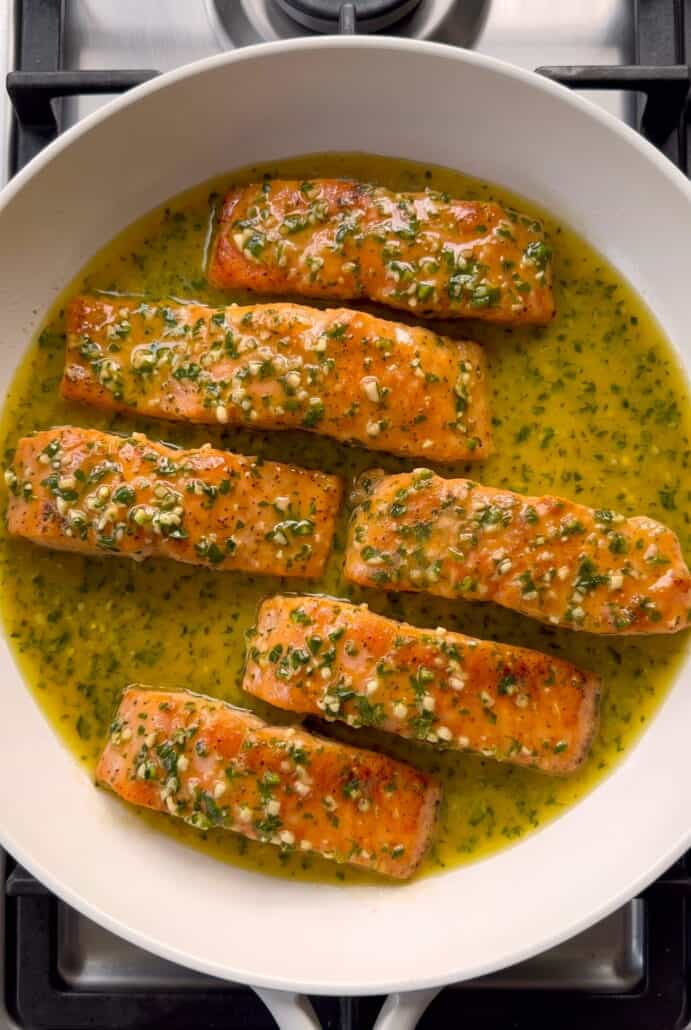
Ingredients For Garlic Butter Salmon
- Salmon fillets – Boneless, skinless salmon fillets are used for this recipe. Let them sit at room temperature for 15 to 30 minutes before cooking so they cook more evenly.
- All-purpose flour – The flour creates a light coating on the salmon. It helps form a golden crust and allows the garlic butter sauce to cling to the fish.
- Garlic powder – Garlic powder seasons the flour coating. It adds extra garlic flavor to the salmon before it goes into the pan.
- Salt – Salt seasons both the salmon coating and the finished sauce. Add more at the end only if needed.
- Black pepper – Black pepper gives the salmon a mild savory bite. You can adjust the amount to suit your taste.
- Olive oil – Olive oil is used to pan-fry the salmon. It helps the fillets develop a crisp, golden exterior.
- Unsalted butter – Butter adds rich flavor and creates the base of the sauce. Using unsalted butter makes it easier to control the final seasoning.
- Fresh garlic – Finely chopped fresh garlic gives the sauce its bold flavor. Fresh garlic works best because jarred garlic can change the taste of the sauce.
- Vegetable stock – Vegetable stock adds flavor and helps transform the melted butter into a smooth sauce. It also keeps the sauce from becoming too oily.
- Fresh parsley – Parsley adds color and a fresh flavor to the garlic butter sauce. It also pairs well with the salmon and garlic.
- Lemon – Lemon wedges are served alongside the salmon. A squeeze of lemon juice cuts through the richness of the butter sauce.
For the exact measurements of the ingredients, see the printable recipe card at the bottom of this article.
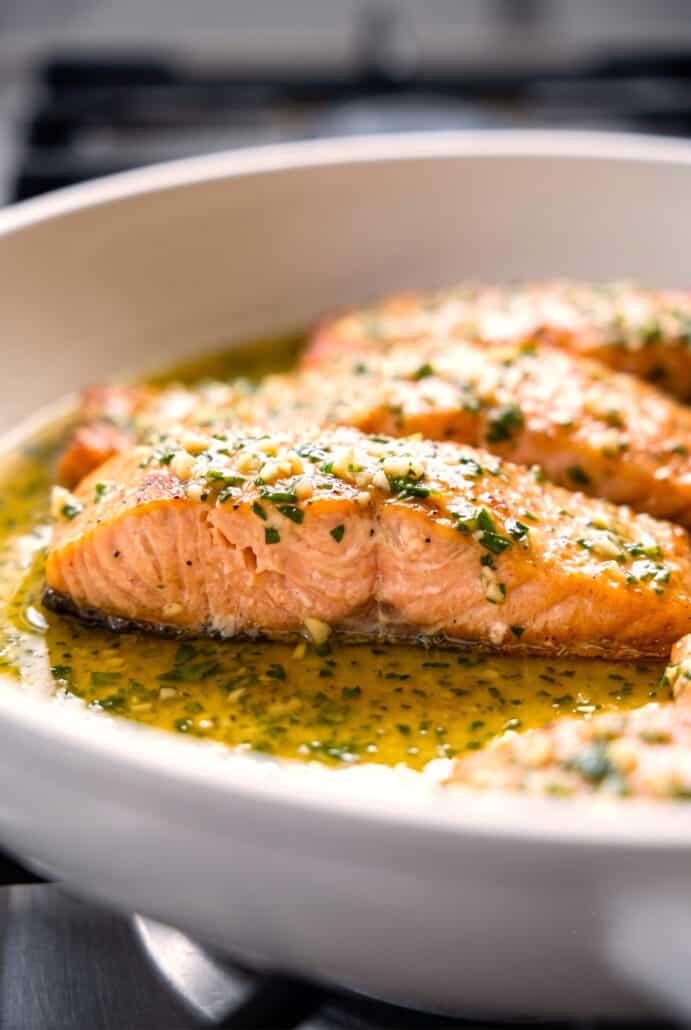
How To Make Garlic Butter Salmon
- Take the salmon fillets out of the refrigerator 15 to 30 minutes before you begin cooking.
- Place the flour, garlic powder, salt, and black pepper in a shallow dish. Stir until the seasonings are evenly mixed.
- Dip each salmon fillet into the flour mixture. Coat all sides, then gently shake away any extra flour.
- Heat the olive oil in a large nonstick frying pan over medium-high heat. Add the salmon and cook for about 3 minutes, until the bottom is golden.
- Flip the salmon carefully and cook the other side for about 2 minutes. Add 1 tablespoon of butter and spoon the melted butter over the fillets for another minute.
- Move the salmon to a plate and reduce the heat to medium. Add the chopped garlic and cook briefly, watching closely so it does not burn.
- Pour in the vegetable stock and scrape up the flavorful browned pieces from the bottom of the pan.
- Whisk in the remaining butter until the sauce looks smooth. Stir in the parsley, then season with additional salt and black pepper as needed.
- Let the garlic butter sauce simmer gently for a few minutes. Stir often until it starts to thicken.
- Return the salmon to the frying pan. Spoon the sauce over the fillets and warm them through over low heat.
- Serve the garlic butter salmon immediately with extra sauce and a lemon wedge on the side.
Serving Suggestions
- Pair it with crispy smashed potatoes and steamed asparagus for a complete dinner.
- Serve it with homemade buttery breadsticks and a simple side salad for a lighter meal.
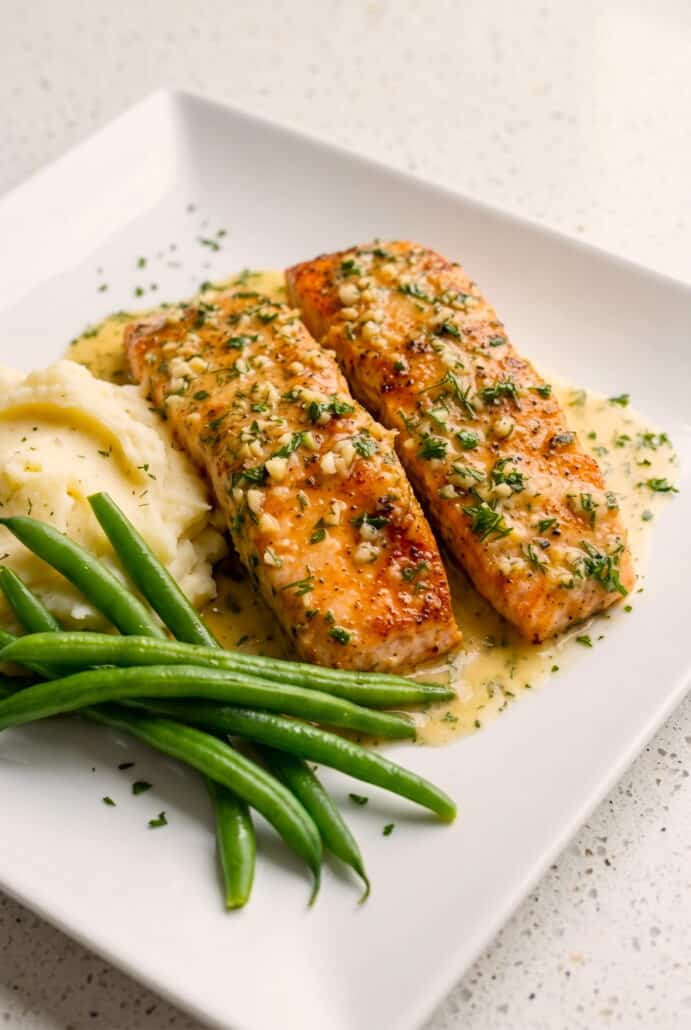
- Add creamy mashed potatoes or a baked potato with steamed green beans for a comforting dinner.
- Pair it with lemon roasted potatoes and broccolini when serving guests.
- Spoon extra garlic butter sauce over the salmon just before serving.
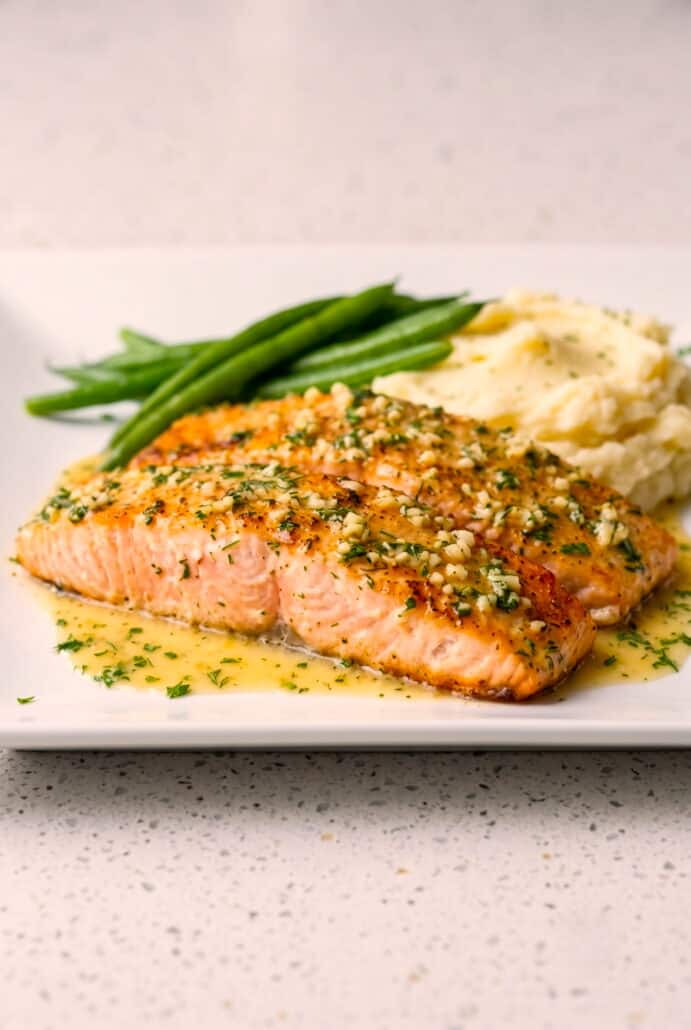
- Place the salmon on a serving platter and garnish it with fresh parsley and lemon wedges for a simple presentation.
Tips For Success
- Let the salmon sit out briefly before cooking – Take the salmon fillets out of the refrigerator 15 to 30 minutes before you begin. This helps them cook more evenly in the pan. Do not leave them out longer than needed.
- Pat the salmon dry if necessary – If you are using thawed frozen salmon, make sure it is fully defrosted first. Pat the fillets dry with paper towels before coating them in flour. Removing excess moisture helps the salmon develop a golden crust instead of steaming.
- Coat the salmon evenly – Press each fillet lightly into the seasoned flour so the surface is covered. Shake off any extra flour before placing the salmon in the pan. A thin, even coating creates a crisp crust and helps the garlic butter sauce cling to the fish.
- Make sure the pan and oil are hot – Heat the olive oil over medium-high heat before adding the salmon. The fillets should begin to sizzle when they touch the pan. This helps create a beautiful golden exterior.
- Do not move the salmon too soon – Let the first side cook for about 3 minutes before turning it. Moving the fish too early can keep the crust from forming properly. Once the bottom is golden, carefully flip the fillets with tongs.
- Avoid overcooking the salmon – The salmon only needs to be almost cooked through before you remove it from the pan. It will continue cooking slightly as it rests and again when it is returned to the sauce. When in doubt, remove it early because you can always cook it a little longer later.
- Watch the fresh garlic closely – Garlic only needs about 20 seconds in the pan before it starts to turn golden. Stir it and keep the heat under control. Burned garlic can make the entire sauce taste bitter.
- Simmer the sauce gently – Avoid boiling the garlic butter sauce too aggressively. High heat can cause the sauce to separate. Keep it at a gentle simmer and stir frequently while the stock reduces.
- Give the sauce time to thicken – The sauce may look thin when the butter and stock are first combined. Continue simmering and stirring until it begins to thicken. It will become even thicker after the flour-coated salmon is returned to the pan.
- Use unsalted butter when possible – Unsalted butter gives you more control over the final seasoning. If you use salted butter, add extra salt carefully. Low-sodium stock can also help prevent the sauce from becoming too salty.
- Measure the butter accurately – Use level tablespoons instead of heaping spoonfuls. Too much butter can make the sauce heavy or greasy. Proper measurements help the butter combine smoothly with the vegetable stock.
- Serve the lemon on the side – Do not squeeze the lemon directly into the frying pan. The juice may cause the butter sauce to separate. Give each person a lemon wedge so they can add as much as they like.
Variations And Substitutions
- Use frozen salmon – Frozen salmon works well for this recipe. Thaw it completely before cooking. Pat each fillet dry with paper towels to remove extra moisture. This step is important because wet salmon may steam instead of forming a crisp, golden crust.
- Choose larger salmon fillets – You can use fillets that are larger than 4 to 5 ounces. They may need a little more time in the pan. Watch the color and texture instead of relying only on the cooking time. The salmon should flake easily, and the center should change from deep pink to a lighter pink.
- Use salted butter carefully – Unsalted butter is recommended because it gives you more control over the seasoning. Salted butter can still be used when that is what you have. Reduce the extra salt and taste the sauce before adding more. Using low-sodium vegetable stock can also help keep the sauce from becoming too salty.
- Adjust the amount of seasoning – Add extra salt or black pepper after the sauce is prepared if needed. It is easier to add more seasoning than to correct a sauce that is too salty. Taste the sauce before returning the salmon to the pan.
- Change the size of the salmon portions – Smaller fillets may cook more quickly, while thicker pieces may need additional time. Remove the salmon when it is just about cooked through. It will continue cooking while it rests and again when it is warmed in the garlic butter sauce.
- Try another protein – The same garlic butter style can also be used with cod, chicken, or pork chops. Cooking times will be different, so make sure the chosen protein is fully cooked before serving. The garlic, butter, stock, and parsley combination creates a flavorful sauce that works with several proteins.
- Keep the fresh garlic – Fresh garlic gives the sauce its best flavor. Jarred or pickled garlic is stored in liquid that can change the taste of the finished sauce. For the closest result to the original recipe, use freshly chopped garlic and cook it only until it begins to turn golden.
- Serve the lemon separately – Lemon adds brightness and balances the rich butter sauce. Keep the wedges on the side instead of squeezing the juice directly into the pan. Adding lemon juice to the sauce may cause it to separate. This also lets everyone choose how much lemon they want.
- Adjust the sauce consistency – If the sauce becomes too thick or starts to separate, add 1 tablespoon of vegetable stock. Whisk it well until the sauce becomes smooth again. If it looks too thin, continue simmering it gently while stirring. The flour coating on the salmon will also help thicken the sauce after the fillets are returned to the pan
Storage And Reheating
- Refrigerator – Let the garlic butter salmon cool completely before storing it. Place the salmon and sauce in an airtight container and refrigerate for up to 3 days.
- Freezer – Place the cooled salmon in a freezer-safe container. Freeze it for up to 2 months for the best flavor and texture.
- Thawing – Move frozen salmon to the refrigerator and let it thaw overnight before reheating.
- Stovetop – Place the salmon and garlic butter sauce in a covered pan over low heat. Add a small splash of vegetable stock if the sauce is too thick. Heat gently until the salmon is warmed through.
- Oven – Put the salmon in a baking dish and spoon the sauce over the top. Cover the dish with foil and reheat at 300°F until warmed through.
- Microwave – Place the salmon on a microwave-safe plate and cover it loosely. Heat in short intervals at reduced power to help prevent the fish from drying out.
- For best results – Avoid reheating the salmon more than once. Gentle heat will help keep it tender and prevent the garlic butter sauce from separating.
Frequently Asked Questions
Can I Use Frozen Salmon For Garlic Butter Salmon?
Yes, frozen salmon can be used for this recipe. Thaw the fillets completely before you begin cooking. Once thawed, pat the salmon dry with paper towels to remove as much excess moisture as possible. This step helps the seasoned flour stick to the fish and allows the salmon to form a beautiful golden crust in the frying pan. If the surface is too wet, the salmon may steam instead of becoming crisp.
Can I Use Salmon With The Skin On?
This recipe is made with boneless, skinless salmon fillets. Skinless fillets allow the seasoned flour to coat the entire surface of the salmon. This creates a golden exterior that absorbs the garlic butter sauce and helps it cling to every bite. For results that are closest to this recipe, use skinless salmon fillets that weigh about 4 to 5 ounces each.
How Do I Know When The Salmon Is Cooked?
The salmon should flake easily, and the center should change from a deep pink color to a lighter pink that is similar to the outside. Cook the first side for about 3 minutes and the second side for about 2 minutes. After adding a tablespoon of butter, baste the salmon for approximately 1 minute. Remove the fillets when they are just about cooked through because they will continue cooking as they rest and when they are returned to the sauce.
Want to save this recipe?
What Should I Do If My Salmon Fillets Are Larger?
Larger or thicker salmon fillets can be used, but they may require more cooking time. Watch the appearance and texture of the salmon instead of depending only on the suggested cooking times. The fish should be almost cooked through before you remove it from the frying pan. Remember that the salmon will continue cooking slightly while it rests and again when it is warmed in the finished garlic butter sauce.
Why Is The Salmon Coated In Flour?
The seasoned flour serves two important purposes. First, it helps the salmon develop a crisp and golden crust as it cooks in the olive oil. Second, the flour helps the garlic butter sauce stick to the salmon instead of sliding off. It also helps thicken the sauce when the salmon is returned to the pan. Shake away any extra flour so the coating remains light.
Can I Use Salted Butter Instead Of Unsalted Butter?
Yes, salted butter can be used when unsalted butter is not available. However, you should be cautious when adding extra salt to the flour mixture and sauce. Unsalted butter gives you more control over the final flavor of the dish. If you use salted butter, consider using low-sodium vegetable stock and taste the sauce before adding any additional seasoning.
Why Should I Use Fresh Garlic?
Fresh garlic gives the butter sauce its best flavor. Pre-chopped or jarred garlic is often stored in liquid or brine, which can alter the taste of the finished sauce. Finely chop two fresh garlic cloves and cook them only until they begin to take on a little color. This should take about 20 seconds. Watch the garlic carefully because burned garlic can make the sauce taste bitter.
How Do I Keep The Garlic From Burning?
Reduce the heat to medium after removing the salmon from the frying pan. Add the finely chopped garlic and stir it as it cooks. The garlic only needs a short time in the pan, so do not walk away. As soon as it begins to turn lightly golden, pour in the vegetable stock. The liquid will stop the garlic from continuing to fry in the hot pan.
Why Is Vegetable Stock Added To The Butter Sauce?
Vegetable stock adds extra depth of flavor and helps turn the melted butter into a smoother, thicker sauce. It also helps prevent the finished sauce from feeling overly greasy. After adding the stock, scrape the browned pieces from the bottom of the pan because they contain plenty of flavor. Whisking in the butter allows it to combine with the stock and form a cloudy garlic butter sauce.
How Can I Thicken The Garlic Butter Sauce?
The sauce may look thin when the stock and butter are first combined. Let it simmer gently for a few minutes while stirring frequently. As the stock reduces, the sauce will gradually become thicker. It will thicken even more after the flour-coated salmon is returned to the pan. Avoid simmering the sauce too aggressively because high heat may cause it to separate.
What Should I Do If The Sauce Starts To Separate?
If the sauce becomes very thick and begins to split, add about 1 tablespoon of vegetable stock. Whisk the sauce thoroughly until it comes back together. Keep the heat low and avoid boiling it aggressively. Carefully measuring the butter is also important. Use level tablespoons so the sauce does not contain more butter than the stock can easily hold.
Should I Add The Lemon Juice To The Sauce?
Do not squeeze the lemon juice directly into the frying pan because it may cause the butter sauce to separate. Instead, divide the lemon into four wedges and serve one with each salmon fillet. Everyone can squeeze fresh lemon juice over their serving. The bright citrus flavor cuts through the richness of the garlic butter sauce and gives the dish a balanced finish.
What Can I Serve With Garlic Butter Salmon?
This salmon pairs well with many simple side dishes. Serve it with Parmesan smashed potatoes and asparagus for a satisfying dinner. For a lighter meal, add crusty bread and a fresh side salad. Mashed potatoes or a baked potato with green beans create a comforting combination. Lemon roasted potatoes and broccolini make an attractive option when serving the salmon to guests.
Can I Make This Recipe With Another Protein?
The same garlic butter style can be used with cod, chicken, or pork chops. However, each protein will require a different cooking time. Make sure the protein you choose is fully cooked before serving. The combination of fresh garlic, butter, vegetable stock, and parsley creates a flavorful sauce that pairs well with several different proteins.
Other Easy Salmon Recipes
- Crispy Salmon Bites
- Salmon Sushi Bake
- Salmon Burgers on the Grill
- Smoked Salmon Cream Cheese Crackers
- Oven-Baked Sockeye Salmon
- Canned Salmon Soup
- Salmon Spinach Egg Casserole

Garlic Butter Salmon
Want to save this recipe?
Ingredients
- 1 tsp garlic powder
- 1 tsp salt plus more to taste
- 1/2 tsp black pepper plus more to taste
- 1/4 cup all-purpose flour
- 4 salmon fillets boneless, skinless, about 4 to 5 ounces each
- 1 tbsp olive oil
- 6 tbsp unsalted butter divided
- 2 garlic cloves finely chopped
- 1/2 cup vegetable stock
- 1 tbsp fresh parsley finely chopped
- 1 lemon cut into 4 wedges
Instructions
- Remove the salmon from the refrigerator 15 to 30 minutes before cooking.
- Add the flour, garlic powder, salt, and black pepper to a large shallow dish. Mix with a fork.
- Coat each salmon fillet in the seasoned flour. Gently shake off any excess flour and set the salmon aside.
- Heat the olive oil in a large nonstick frying pan over medium-high heat.
- Place the salmon fillets in the hot pan. Cook for about 3 minutes, or until the bottoms develop a golden crust.
- Carefully turn the salmon over. Cook for another 2 minutes, or until the second side is golden.
- Add 1 tablespoon of butter to the pan. Spoon the melted butter over the salmon for about 1 minute, until the fish is almost cooked through.
- Transfer the salmon to a plate. Reduce the heat to medium.
- Add the chopped garlic to the pan. Cook for about 20 seconds, just until lightly golden.
- Pour in the vegetable stock. Use a wooden spoon to scrape the flavorful browned bits from the bottom of the pan.
- Add the remaining 5 tablespoons of butter. Whisk until the butter melts into the stock and the sauce becomes smooth and cloudy.
- Stir in the fresh parsley. Taste the sauce and add more salt or black pepper if needed.
- Let the sauce simmer gently for a few minutes. Stir frequently until it begins to thicken.
- Reduce the heat to low. Return the salmon to the pan and spoon the garlic butter sauce over each fillet.
- Warm the salmon briefly in the sauce. Serve immediately with extra sauce and a lemon wedge.
Notes
- Use fresh garlic and watch it closely so it does not burn.
- Serve the lemon on the side so the juice does not separate the butter sauce.