Tteokbokki (Spicy Rice Cakes) Korean Street Food Recipe
This post may contain affiliate links (disclosure).
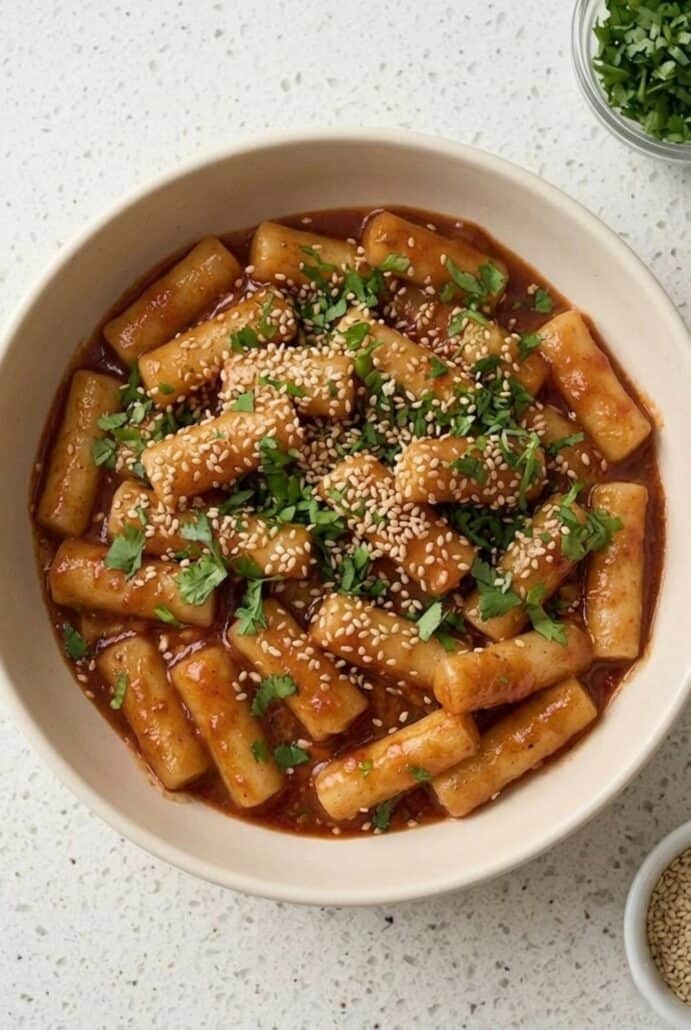
If you’re craving bold, spicy comfort food, this homemade tteokbokki is exactly what you need. Made with soft, chewy rice cakes and a rich, flavorful sauce, this Korean-inspired dish is surprisingly easy to make right in your own kitchen. Using simple ingredients and a quick cooking method, you’ll have a delicious, restaurant-style meal ready in no time.
Want to save this recipe?
Why You’ll Love Tteokbokki
- This recipe is packed with bold, spicy, and slightly sweet flavors that make every bite exciting. The sauce perfectly coats the chewy rice cakes for a satisfying texture. It tastes just like your favorite Korean street food. You’ll keep coming back for more because it’s so addictive.
- It’s surprisingly easy to make at home with simple pantry ingredients. You don’t need any special skills or hard-to-find items. The steps are straightforward and beginner-friendly. Even if you’re new to cooking, you can make this successfully.
- The homemade rice cakes are soft, chewy, and fresh. Making them from scratch gives you full control over the texture. They taste better than store-bought versions. Plus, it’s a fun cooking experience.
- This recipe is quick and perfect for busy days. You can have everything ready in about 30 minutes. It works great as a snack, appetizer, or even a main dish. Perfect when you want something comforting fast.
- It’s easy to customize based on your spice level and preferences. You can adjust the heat or add your favorite toppings. The sauce can be made sweeter or spicier. This flexibility makes it great for everyone.
Ingredients For Tteokbokki
- Rice flour – This forms the base of the rice cakes and gives them that classic chewy texture. It’s essential for achieving the authentic bite. Make sure to use fine rice flour for best results.
- Sabudana (sago) flour – This adds extra chewiness and elasticity to the rice cakes. It helps improve the texture so they are not too dense. It blends perfectly with the rice flour.
- Corn flour – This helps bind the dough together and gives a smoother consistency. It also slightly softens the texture of the rice cakes. A small amount goes a long way.
- Salt – Enhances the overall flavor of both the rice cakes and the sauce. It balances out the sweetness and spice. Even a small amount makes a big difference.
- Sugar – Adds a subtle sweetness that balances the spicy flavors. It’s used in both the dough and the sauce. This creates that signature sweet-spicy taste.
- Boiling water – Helps bring the dough together and cooks the flour slightly. It’s important to use hot water for the right texture. This step ensures the dough forms properly.
- Oil – Used for cooking the sauce and adding richness. It helps sauté the garlic and spices evenly. It also prevents sticking.
- Garlic – Adds a deep, savory flavor to the dish. When cooked, it becomes aromatic and enhances the sauce. Fresh garlic works best.
- Chili flakes – Bring heat and a bit of texture to the sauce. You can adjust the amount based on your spice preference. It adds a nice kick.
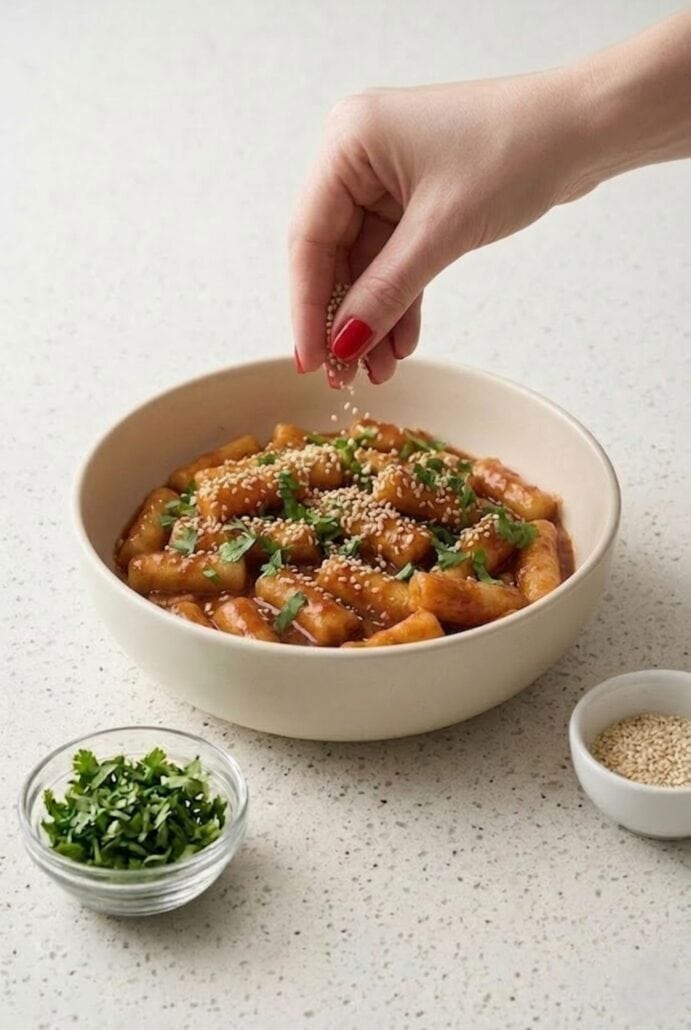
- Sesame seeds – Add a nutty flavor and slight crunch. They enhance both taste and texture. They can also be used as a topping.
- Red chili powder – Gives the dish its bold red color and spicy flavor. It intensifies the heat level. Adjust as needed.
- Maggi hot and sweet sauce – Adds a unique sweet and tangy flavor. It helps create a rich, balanced sauce. This ingredient makes the dish extra delicious.
- Soy sauce – Adds saltiness and umami depth to the sauce. It enhances all the other flavors. A little goes a long way.
- Water – Helps create the sauce and allows everything to simmer together. It ensures the rice cakes cook evenly. It also controls the thickness of the sauce.
- Fresh coriander – Adds a fresh, herby finish to the dish. It brightens up the flavors. It’s used as a garnish at the end.
For the exact measurements of the ingredients, see the printable recipe card at the bottom of this article
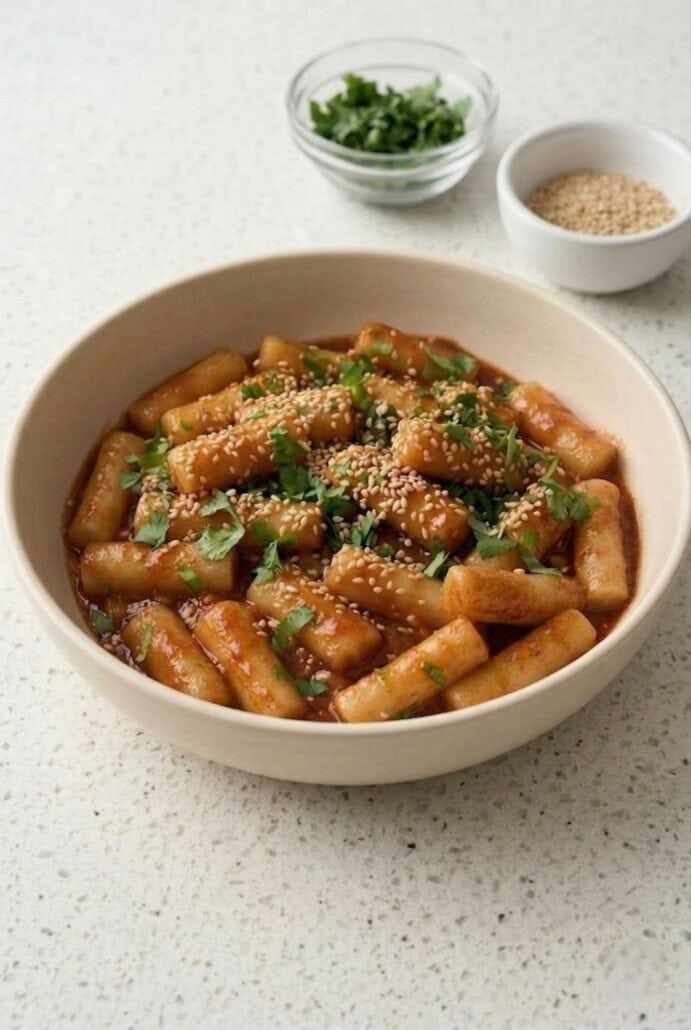
How To Make Tteokbokki
- Combine the flours, salt, and sugar in a bowl, then add boiling water and mix until a dough forms
- Microwave the mixture, stir, and heat again until it becomes thick and dough-like
- Let the dough cool slightly, then knead it with a little oil until smooth
- Shape the dough into long ropes and cut into small bite-sized pieces
- Heat oil in a pan and sauté garlic until fragrant
- Add spices, sauces, and water, then stir and let the sauce simmer
- Add the rice cakes and cook until they are fully coated and heated through
- Finish by topping with fresh coriander and serve hot
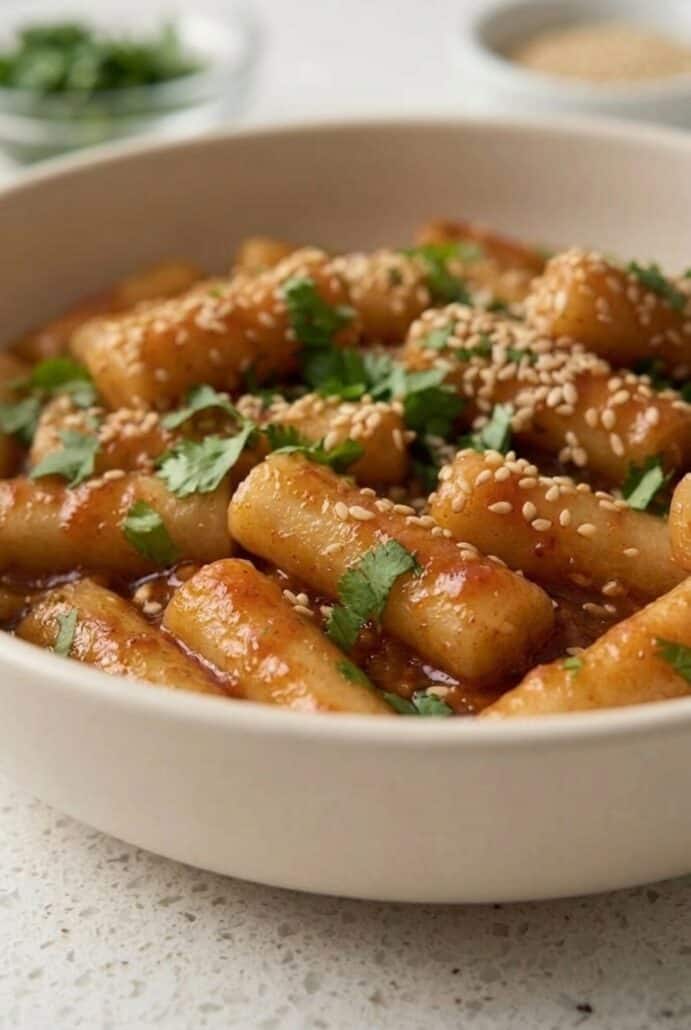
Serving Suggestions
- Serve tteokbokki hot right after cooking for the best chewy texture and bold flavor. It tastes best when the sauce is fresh and glossy. This is when the rice cakes are at their softest.
- Pair it with a side of fluffy white rice to balance out the spice. The mild flavor of rice helps mellow the heat. It also makes the meal more filling.
- Add a sprinkle of extra sesame seeds and fresh coriander on top for a beautiful presentation. This adds both texture and freshness. It makes the dish look more appetizing.
- Serve with a lettuce and tomato salad or fresh cucumber spears on the side. The freshness helps cut through the richness of the sauce. It creates a nice contrast.
- Enjoy it as a snack, appetizer, or even a main dish. It’s versatile and works for any time of day. Perfect for sharing or enjoying on your own.
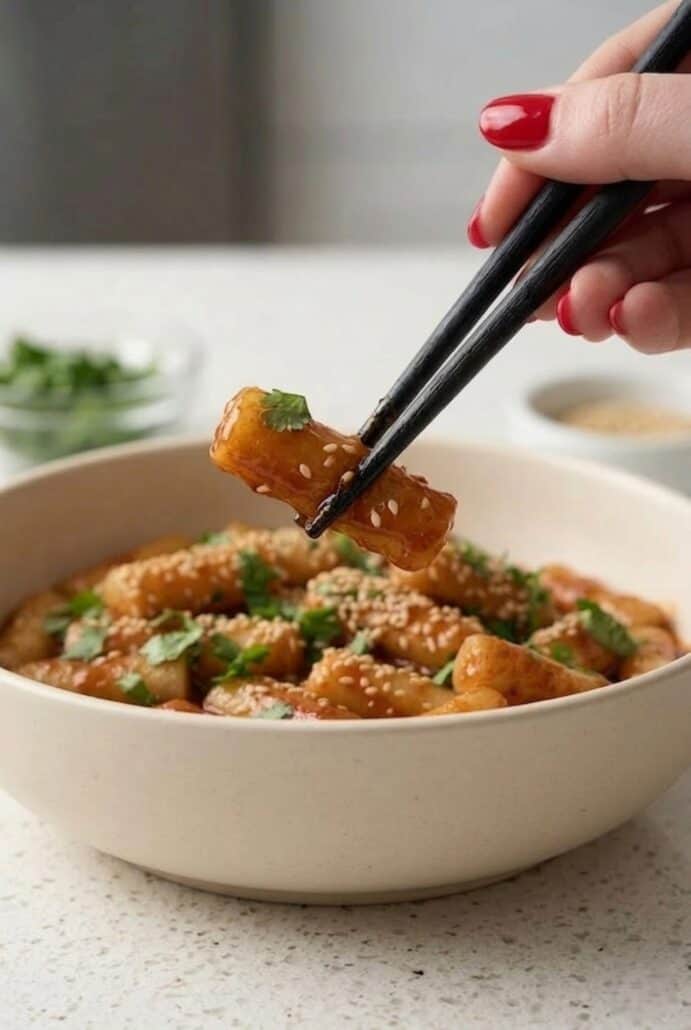
Tips For Success
- Making tteokbokki at home is simple, but a few helpful tips can really take your results to the next level. First, pay close attention to the dough consistency when making the rice cakes. The dough should be soft, slightly sticky, but still easy to handle. If it feels too dry, add a few drops of water. If it’s too wet, let it rest for a minute before kneading again. Getting this balance right ensures your rice cakes turn out perfectly chewy.
- When microwaving the dough, make sure to mix it well between heating intervals. This helps cook the flour evenly and prevents lumps. Uneven mixing can lead to hard or dense spots in your rice cakes. Stirring thoroughly each time keeps the texture smooth and consistent.
- Kneading is another important step you don’t want to rush. Adding a little oil while kneading helps create a smooth and elastic dough. This makes it easier to shape and improves the final texture. Take a few extra minutes here and you’ll notice a big difference.
- When cooking the sauce, don’t let the garlic burn. Cook it just until fragrant to bring out the best flavor. Burnt garlic can make the entire dish taste bitter. Keep the heat at medium and stir frequently.
- Adjust the spice level to your preference. If you like it milder, reduce the chili powder or flakes. If you enjoy extra heat, feel free to add more. This recipe is very flexible, so make it your own.
- When adding the rice cakes to the sauce, make sure they are well coated. Stir gently so they don’t break apart. Let them simmer just long enough to absorb the flavors without becoming too soft.
- Finally, serve the dish immediately after cooking. Tteokbokki tastes best when hot and fresh. As it sits, the sauce thickens and the rice cakes can become firmer. Enjoy it right away for the best texture and flavor.
Variations And Substitutions
- One of the best things about this tteokbokki recipe is how easy it is to customize based on your taste and what you have on hand. You can easily adjust the spice level, swap ingredients, or add extras to make it your own. This makes it perfect for experimenting in the kitchen without worrying about strict rules.
- If you prefer a milder version, simply reduce the amount of chili flakes and red chili powder. You can even skip one of them entirely for a more subtle heat. On the other hand, if you love spicy food, feel free to increase both or add a dash of hot sauce. This flexibility lets you control the heat exactly how you like it.
- For the sauce, if you don’t have Maggi hot and sweet sauce, you can substitute it with any sweet and tangy sauce you have available. Something with a balance of sweetness and acidity will work well. You can also slightly increase the sugar and soy sauce combination to mimic that flavor profile. Small adjustments can still give you a delicious result.
- The rice cakes themselves can also be adapted. If you don’t have sabudana flour, you can try using more rice flour, though the texture may be slightly less chewy. The combination used in this recipe helps create that signature bounce, but it’s still forgiving. Homemade rice cakes are very versatile.
- You can also add vegetables to make the dish more filling and nutritious. Sliced onions, bell peppers, or even cabbage would work really well. Just sauté them along with the garlic before adding the sauce ingredients. This adds color, texture, and extra flavor.
- For added protein, consider mixing in tofu or paneer cubes. They absorb the sauce nicely and make the dish more satisfying as a main meal. This is a great option if you want to turn it into a more complete dish.
- If you want a slightly nuttier flavor, drizzle a bit of sesame oil at the end. This enhances the aroma and adds depth. You can also increase the sesame seeds for extra crunch.
- Finally, for garnish, you can go beyond coriander. Try adding green onions or even a sprinkle of crushed peanuts for a different twist. These small changes can completely transform the dish while keeping it simple and delicious.
Storage and Reheating
- Store any leftover tteokbokki in an airtight container in the refrigerator. It will stay fresh for up to 2–3 days. Make sure it cools completely before storing to maintain the best texture.
- Keep in mind that the rice cakes will firm up as they sit in the fridge. This is completely normal due to their chewy texture. Don’t worry, they will soften again when reheated.
- To reheat, add the tteokbokki to a pan with a splash of water. Heat on the stovetop over medium heat, stirring gently until warmed through. This helps loosen the sauce and restore the soft, chewy texture.
- You can also reheat it in the microwave. Add a little water, cover loosely, and heat in short intervals, stirring in between. This prevents the rice cakes from drying out.
- Avoid overheating, as this can make the rice cakes too soft or mushy. Heat just until warmed through for the best results.
Frequently Asked Questions
What is tteokbokki made of?
Tteokbokki is traditionally made with chewy rice cakes cooked in a flavorful sauce. In this recipe, the rice cakes are made from a combination of rice flour, sabudana (sago) flour, and corn flour, which creates a soft and chewy texture. The sauce is a delicious mix of garlic, chili flakes, red chili powder, soy sauce, and a sweet and tangy element from Maggi hot and sweet sauce. Everything comes together to create a spicy, slightly sweet, and savory dish. It’s simple ingredients, but the flavor is bold and satisfying.
Can I make tteokbokki less spicy?
Yes, you can easily adjust the spice level to suit your taste. Simply reduce the amount of chili flakes and red chili powder used in the recipe. You can even skip one of them if you prefer a very mild version. Adding a little extra sugar can also help balance out the heat. This recipe is very flexible, so you can customize it to be as mild or as spicy as you like.
Why are my rice cakes hard after refrigerating?
Rice cakes naturally become firmer when stored in the refrigerator. This happens because the starches tighten up as they cool. It’s completely normal and doesn’t mean they are spoiled. When you reheat them with a little water, they will soften again and return to their chewy texture. Just be sure not to overheat them, as that can make them too soft.
Want to save this recipe?
Can I store homemade rice cakes separately?
Yes, you can store the uncooked rice cakes separately in the refrigerator for a few days. Make sure to keep them in an airtight container so they don’t dry out. When you’re ready to use them, simply add them directly to the sauce and cook as instructed. This is a great way to prep ahead and save time later. Fresh homemade rice cakes taste best within a few days.
What can I use instead of Maggi hot and sweet sauce?
If you don’t have Maggi hot and sweet sauce, you can substitute it with any sweet and tangy sauce you have on hand. The goal is to maintain that balance of sweetness and slight acidity. You can also mix a bit of sugar with soy sauce to create a similar flavor profile. While the taste may vary slightly, it will still turn out delicious. This recipe is very forgiving with substitutions.
Can I add toppings to this tteokbokki?
Absolutely! Toppings are a great way to add extra flavor and texture to your dish. You can sprinkle additional sesame seeds on top for a nutty crunch. Fresh coriander is already included, but you can also try green onions for a different twist. Even crushed peanuts can add an interesting texture. Feel free to get creative and make it your own.
Other Easy Korean Recipes
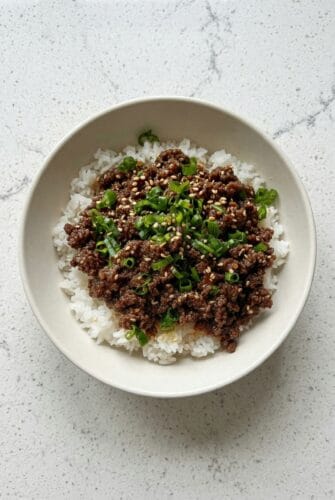
Korean Ground Beef Rice Bowl – A quick and flavorful Korean beef bowl made with savory ground beef, garlic, and a sweet soy-based sauce served over rice.
Korean Spicy Cucumber Salad – A crisp and refreshing cucumber salad tossed in a spicy, tangy Korean-style seasoning.
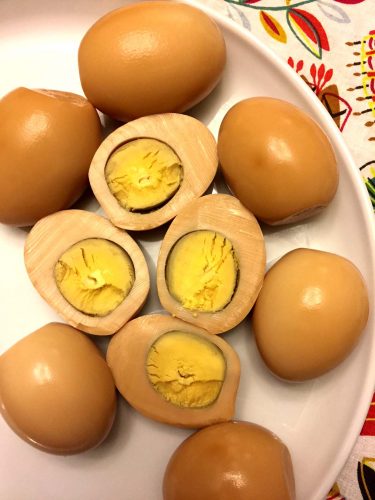
Instant Pot Korean Sauna Eggs – Easy pressure cooker Korean sauna eggs with a rich, nutty flavor and perfectly cooked yolks.
Korean BBQ Beef – Tender, marinated Korean BBQ beef packed with sweet, savory, and smoky flavors.
Spicy Korean Potato Noodles – Chewy potato noodles stir-fried in a bold, spicy Korean sauce for a quick and satisfying dish.
Air Fryer Trader Joe’s Kimbap – Crispy air fryer kimbap made from frozen Trader Joe’s rolls with no microwave needed.
Trader Joe’s Scallion Pancakes – Golden and crispy scallion pancakes cooked in the air fryer straight from frozen for an easy side dish.
Tteokbokki (Korean Spicy Rice Cakes)
Want to save this recipe?
Ingredients
- 1/2 cup rice flour
- 5 tbsp sabudana flour sago flour
- 1 tbsp corn flour
- 1/2 tsp salt to taste
- 1 tsp sugar
- 1 cup boiling water
- 2 tbsp oil
- 4 garlic cloves chopped
- 1 tsp chili flakes
- 1 tbsp sesame seeds
- 1 tsp sugar
- 2 tsp red chili powder
- 1/2 tsp salt
- 2 tbsp Maggi hot and sweet sauce
- 2 tsp soy sauce
- 1 cup water
- 2 tbsp fresh coriander chopped
Instructions
- In a bowl, mix rice flour, sabudana flour, corn flour, salt, and sugar, then pour in boiling water and mix well.
- Microwave for 1 minute 50 seconds, remove, mix again, and add a little water if needed.
- Microwave again for 1 minute 20 seconds and let it cool slightly.
- Add a little oil and knead into a smooth dough.
- Roll the dough into logs and cut into small pieces.
- Heat oil in a pan and cook garlic until fragrant.
- Add chili flakes, sesame seeds, sugar, red chili powder, salt, M.aggi sauce, soy sauce, and water, then mix and bring to a simmer.
- Add the rice cakes and cook until coated and heated through.
- Garnish with fresh coriander.
Notes
- If the dough feels dry while kneading, add a few drops of water to soften it
- Sesame seeds can be added on top as an additional optional topping for extra crunch and flavor