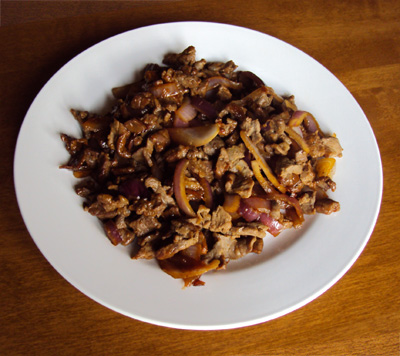
- Use a different cut of beef – Ribeye and flank steak both work well because they cook quickly when sliced thinly. Sirloin is another good option mentioned in the recipe details. No matter which cut you choose, slice it against the grain for a more tender texture. Partially freezing the beef for about 30 minutes can make thin slicing much easier.
- Make a vegetarian version – Replace the beef with tofu or mushrooms for a meat-free variation. Use vegetarian oyster sauce in both the marinade and the black pepper sauce. Tofu will absorb the savory seasonings, while mushrooms will add a rich and satisfying texture. Cook either option until lightly browned before combining it with the noodles.
- Swap the Chinese cabbage – Chinese cabbage gives the dish a pleasant crunch, but other vegetables can work too. Try spinach, bok choy, or broccoli based on what you have available. Spinach will wilt quickly, while bok choy and broccoli may need a little more cooking time. Add the vegetables near the end so they stay fresh and do not become too soft.
- Try a different type of noodle – Udon noodles give this recipe its thick and chewy texture, but the recipe can still be made with other noodles. Rice noodles, soba noodles, or spaghetti can be used as substitutes. Cook the noodles according to their package directions before adding them to the pan. Avoid overcooking them because they will heat again in the sauce.
- Adjust the black pepper – Use less black pepper for a milder dish or add more for a stronger peppery flavor. Freshly ground black pepper gives the sauce the best aroma. For even more heat, add a small pinch of red pepper flakes. Start with a little and increase it gradually so the spice does not overpower the beef and noodles.
- Choose a different starch – Cornstarch and potato starch can both be used in the beef marinade. Potato starch is also used to thicken the black pepper sauce. Either starch helps create a smooth coating and glossy finish. Mix it with water before adding it so it does not form lumps.
- Prepare parts of the recipe ahead – The beef can be marinated in advance, and the black pepper sauce can also be mixed before cooking. Keep them separate until you are ready to prepare the stir-fry. This makes the final cooking process faster and easier. It is especially helpful when making the recipe for a busy weeknight meal.
- Customize the toppings – Finish the dish with sliced green onions, sesame seeds, nori strips, crispy garlic, or chili oil. A soft-boiled egg can also be added for extra richness. Choose one topping or combine several for more flavor and texture. Serve the toppings separately so everyone can customize their own bowl.
Storage and Reheating
- Allow leftover Black Pepper Beef Udon to cool before placing it in an airtight container.
- Store the beef, noodles, vegetables, and sauce together in the refrigerator.
- Reheat the leftovers in a frying pan over medium heat. Toss everything frequently until the beef and noodles are heated through.
- Add a small splash of water while reheating if the noodles or sauce seem dry. This will help loosen the noodles and restore the sauce.
- Avoid cooking the leftovers for too long. Overheating can make the beef tough and cause the udon noodles to lose their chewy texture.
- Serve the reheated Black Pepper Beef Udon immediately for the best taste and texture.
Frequently Asked Questions
What Is Black Pepper Beef Udon?
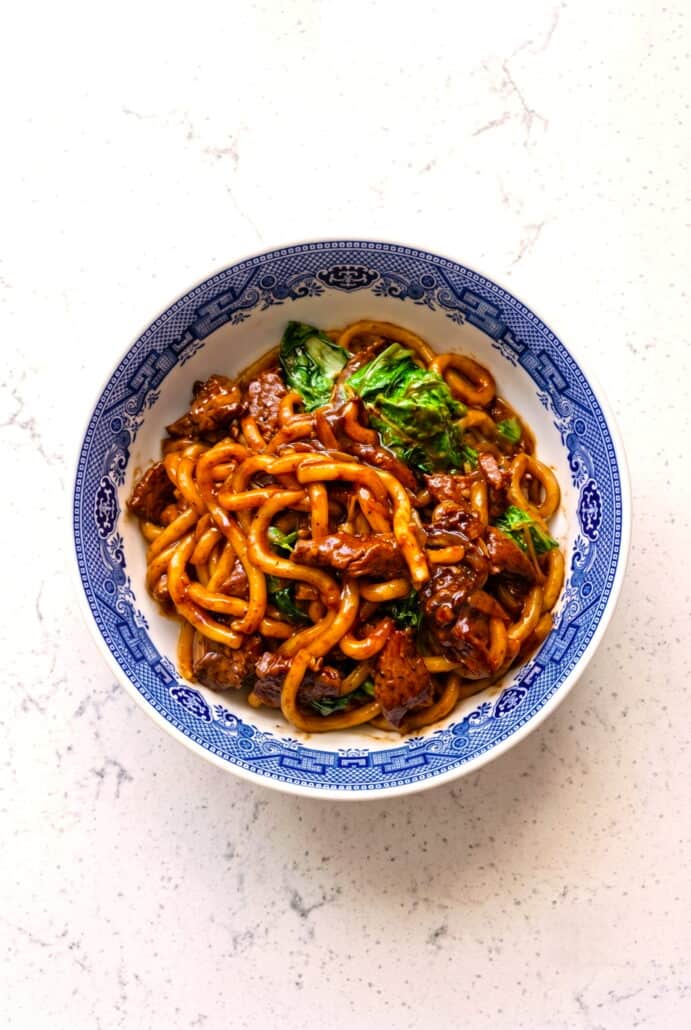
Black Pepper Beef Udon is a stir-fried noodle dish made with thick udon noodles, thinly sliced beef, vegetables, and a savory black pepper sauce. The sauce combines dark soy sauce, oyster sauce, freshly ground black pepper, water, and potato starch. This creates a glossy coating that clings to the noodles and beef. The finished dish is savory, peppery, slightly sweet, and very comforting. It is also quick to prepare, making it a good choice for lunch or dinner when you want something flavorful without spending a long time in the kitchen.
What Cut Of Beef Works Best For Black Pepper Beef Udon?
Ribeye, flank steak, or sirloin are all good choices for this recipe. These cuts can be sliced thinly and cook quickly in a hot pan. Thin slices also absorb the marinade well, so every bite has plenty of flavor. To make slicing easier, place the beef in the freezer for about 30 minutes before cutting it. The beef will become slightly firm, which helps you create thin, even slices. Avoid cooking the beef for too long because it can become tough. Two to three minutes is usually enough before it is removed from the pan.
Can I Use Dried Udon Noodles?
Yes, dried udon noodles can be used instead of fresh udon. Fresh udon has a soft, springy, and chewy texture, but dried udon also works well. Cook dried noodles according to the package directions before adding them to the stir-fry. Be careful not to overcook them because they will continue to heat in the pan with the beef and sauce. The noodles should still have some chew when they are drained. This helps them hold their texture once everything is tossed together.
How Spicy Is Black Pepper Beef Udon?
This dish has a warm, peppery flavor rather than intense heat. The recipe uses two teaspoons of freshly ground black pepper, which gives the sauce its signature taste and aroma. You can reduce the amount for a milder dish or add more for a stronger black pepper flavor. For extra heat, add a small pinch of red pepper flakes or a drizzle of chili oil. Start with a small amount so the spice does not overpower the savory sauce, tender beef, and chewy noodles.
Can I Make Black Pepper Beef Udon Without Beef?
Yes, you can make a vegetarian version by replacing the beef with tofu or mushrooms. Both options work well with the savory black pepper sauce. Tofu absorbs the marinade and sauce, while mushrooms add a rich texture and deep flavor. Use vegetarian oyster sauce to keep the recipe meat-free. Cook the tofu or mushrooms until lightly browned before combining them with the noodles, vegetables, and sauce. This gives the dish a satisfying texture even without the beef.
What Vegetables Can I Use In This Recipe?
Chinese cabbage is a great choice because it adds freshness and a light crunch. You can also use spinach, bok choy, or broccoli. Spinach cooks very quickly, so add it near the end. Bok choy and broccoli may need slightly more cooking time. Use the vegetables you have available, but avoid overcooking them. They should remain fresh and add texture to the soft noodles and tender beef. Adding the vegetables toward the end of cooking helps prevent them from becoming too soft.
Why Is Starch Added To The Marinade And Sauce?
Cornstarch or potato starch helps create a smooth coating around the beef. This gives the cooked beef a tender, silky texture. The potato starch in the black pepper sauce also helps thicken it. Once heated, the sauce becomes glossy and clings to the noodles, beef, and vegetables. Mix the starch with water before adding it to the recipe so it does not form lumps. Stir the sauce again before pouring it into the pan because the starch may settle at the bottom of the bowl.
How Do I Keep The Beef Tender?
Slice the beef very thinly and marinate it before cooking. The marinade includes soy sauce, oyster sauce, sesame oil, vinegar, garlic, and a starch slurry. These ingredients add flavor and help create a smooth coating around the beef. Let it marinate for at least 10 minutes. For even more tender and flavorful beef, allow it to marinate for up to 30 minutes. Cook it quickly over medium heat and remove it from the pan as soon as it is browned. It will heat again when added back to the noodles.
What Toppings Go Well With Black Pepper Beef Udon?
Sliced green onions, sesame seeds, nori strips, crispy garlic, and chili oil all work well as toppings. A soft-boiled egg can also add richness and make the meal even more filling. These toppings bring extra flavor, color, and texture to the dish. You can use one topping or add several. Serve the toppings separately so everyone can finish their bowl the way they like.
Can I Prepare This Recipe Ahead Of Time?
You can prepare several parts of the recipe in advance. Slice and marinate the beef ahead of time, then keep it refrigerated until you are ready to cook. You can also mix the black pepper sauce and store it separately. Slice the onion and prepare the cabbage before cooking as well. When it is time to make the meal, cook the noodles, stir-fry the beef, and combine everything in the pan. Preparing the ingredients in advance makes this already quick recipe even easier.
Other Easy Beef Recipes